

Best Online Video Platforms: Top 14 Solutions in 2026

Video has become the centerpiece of digital communication, encompassing social media engagement, product marketing, internal training, and live event broadcasts. This guide examines the top online video platforms (OVPs), each offering distinct advantages for sharing, streaming, marketing, and more.
Editor’s note: Article updated to add recent market data, impact of AI on the field, and updated information about video platforms to reflect features and capabilities in 2026.
What are online video platforms?
An online video platform (OVP) is a system that enables users to upload, manage, and distribute video content online. These platforms can range from social media sites to dedicated video hosting services. Popular examples include YouTube, Vimeo, Twitch, and Facebook.
OVPs are web-based services that let you host, share, and stream video content over the internet. These platforms deliver video in various formats, ranging from user-generated clips and live broadcasts to professionally produced media. The technological backbone of OVPs includes video encoding, content delivery networks (CDNs), and integrated analytics tools.
OVPs cater to diverse needs such as entertainment, education, marketing, training, and corporate communications. They offer interfaces for content management, audience engagement, monetization, and customization. As video consumption grows, OVPs play a crucial role in shaping how video is accessed, shared, and leveraged for different business and personal goals.
Online video platforms market and trends
Key drivers of market expansion
According to recent market research, several technology and usage trends are driving adoption of online video platforms:
- Programmatic advertising: This automates how video ads are bought and sold. Automated ad auctions combined with first-party data improve targeting and allow publishers to monetize content more efficiently.
- Mobile video consumption: A large majority of viewers now watch streaming content on smartphones, which has encouraged publishers to produce vertical and short-form video formats optimized for mobile screens. These formats also support interactive advertising formats that increase viewer engagement.
- Advances in 5G networks: Lower latency and higher bandwidth make it possible to deliver high-resolution live streams and interactive experiences such as multi-angle sports broadcasts or immersive video sessions.
Enterprise adoption of video platforms
Enterprises are increasingly integrating video across internal operations. Video is now widely used for employee onboarding, compliance training, corporate communications, and marketing. This shift is increasing demand for platforms that provide secure hosting, analytics, and integration with tools such as learning management systems.
AI-based capabilities are also influencing adoption. Features such as automated translation, AI-generated avatars, and advanced analytics reduce production time and help organizations measure engagement and training outcomes. As a result, video platforms are becoming part of broader digital transformation initiatives inside companies.
Main types of online video platforms
Social media platforms with video features
Social media platforms with video features provide vast user bases and built-in engagement tools for sharing video content. Platforms such as Facebook, Instagram, X (formerly Twitter), and LinkedIn allow users to upload videos and incorporate live streaming, stories, and reels into personal and branded content strategies. The reach and interactive elements—likes, shares, and comments—make these platforms valuable for real-time engagement and viral distribution.
These platforms typically prioritize short-form content and integrate with targeted advertising options. Their algorithms surface trending or relevant videos, making them crucial for social video marketing and influencer campaigns. For organizations and creators, these platforms offer a straightforward entry point to build audience awareness and drive social interaction through video.
Dedicated video hosting platforms
Dedicated video hosting platforms focus exclusively on storing, streaming, and managing video content. Examples include YouTube, Vimeo, and Dailymotion. These platforms provide specialized features such as detailed analytics, customizable players, and privacy settings. They support various video formats and resolutions, accommodating both casual creators and professional publishers.
These platforms serve as central repositories for video portfolios, tutorials, entertainment channels, and more. Their content discovery mechanisms—recommendations, playlists, and subscriptions—help audiences find relevant videos. The monetization tools on these platforms, such as ad revenue sharing and pay-per-view models, attract creators looking to generate income from their video content.
Decentralized platforms
Decentralized video platforms leverage blockchain or peer-to-peer technologies to distribute content, eliminating dependence on a single central authority. Examples like LBRY, Odysee, or PeerTube offer more control to creators over ownership and monetization. These platforms often emphasize censorship resistance and transparent revenue-sharing models, appealing to users concerned with platform reliability and content moderation policies.
Decentralized OVPs present unique challenges, including limited reach and varying user experiences compared to centralized giants. However, they provide alternative ecosystems for niche communities and privacy-minded users. These platforms continually evolve as interest in decentralized internet technologies grows.
Enterprise video platforms (EVP)
Enterprise video platforms are tailored for organizations needing secure, scalable internal and external video communication. EVPs such as Kaltura offer features like single sign-on, role-based permissions, and integrations with enterprise software (e.g., learning management systems, CRM). Security and compliance controls are prioritized, making these platforms suitable for corporate communications, training, and virtual events.
They provide admins with analytics, management dashboards, and branding tools. EVPs typically include APIs for custom workflows, ensuring the platform aligns with business needs. Organizations in finance, education, healthcare, and government often rely on EVPs to support knowledge sharing, onboarding, and executive messaging.
How is AI transforming video platforms?
AI is fundamentally reshaping how video content is created, managed, and delivered. In production, generative AI tools can generate entire videos from prompts, automatically edit footage, and create synthetic voiceovers or digital avatars. These features reduce the time and cost of content creation while enabling greater personalization, such as dynamically inserting a viewer’s name or company into a video. AI can also automate tasks like captioning, translation, and formatting, making content more accessible and globally scalable.
On the distribution side, AI enhances viewer engagement through intelligent recommendations and dynamic content sequencing. AI models analyze viewer behavior and contextual signals to surface relevant content, increasing retention and watch time. In analytics, AI provides deeper insights by identifying key moments, measuring sentiment, and detecting drop-off points, allowing teams to optimize content for performance. Across live streaming, training, and marketing use cases, AI is accelerating workflows, improving ROI, and unlocking new creative possibilities for video platforms.
Online video platforms for video sharing
YouTube

YouTube is a video-sharing platform where individuals and organizations can create channels, upload videos, and build audiences around different types of content. Users sign in with a Google account to create a channel and publish videos in multiple formats, including short-form vertical videos (Shorts) and longer videos. The platform provides tools for uploading, organizing, and managing content.
Key features:
- Channel creation and management: Users create channels through their Google accounts to upload videos, organize playlists, and manage content.
- Multiple video formats: Supports short-form vertical videos, such as Shorts, as well as longer videos and other formats.
- Content upload tools: Creators can upload video files directly through the platform, including multiple uploads at once.
- Audience and community tools: Provides features that help creators build audiences, engage viewers, and grow their channels.
- Creator support resources: Includes documentation, tutorials, and support materials that help users learn how to create and manage content.

Source: YouTube
Vimeo

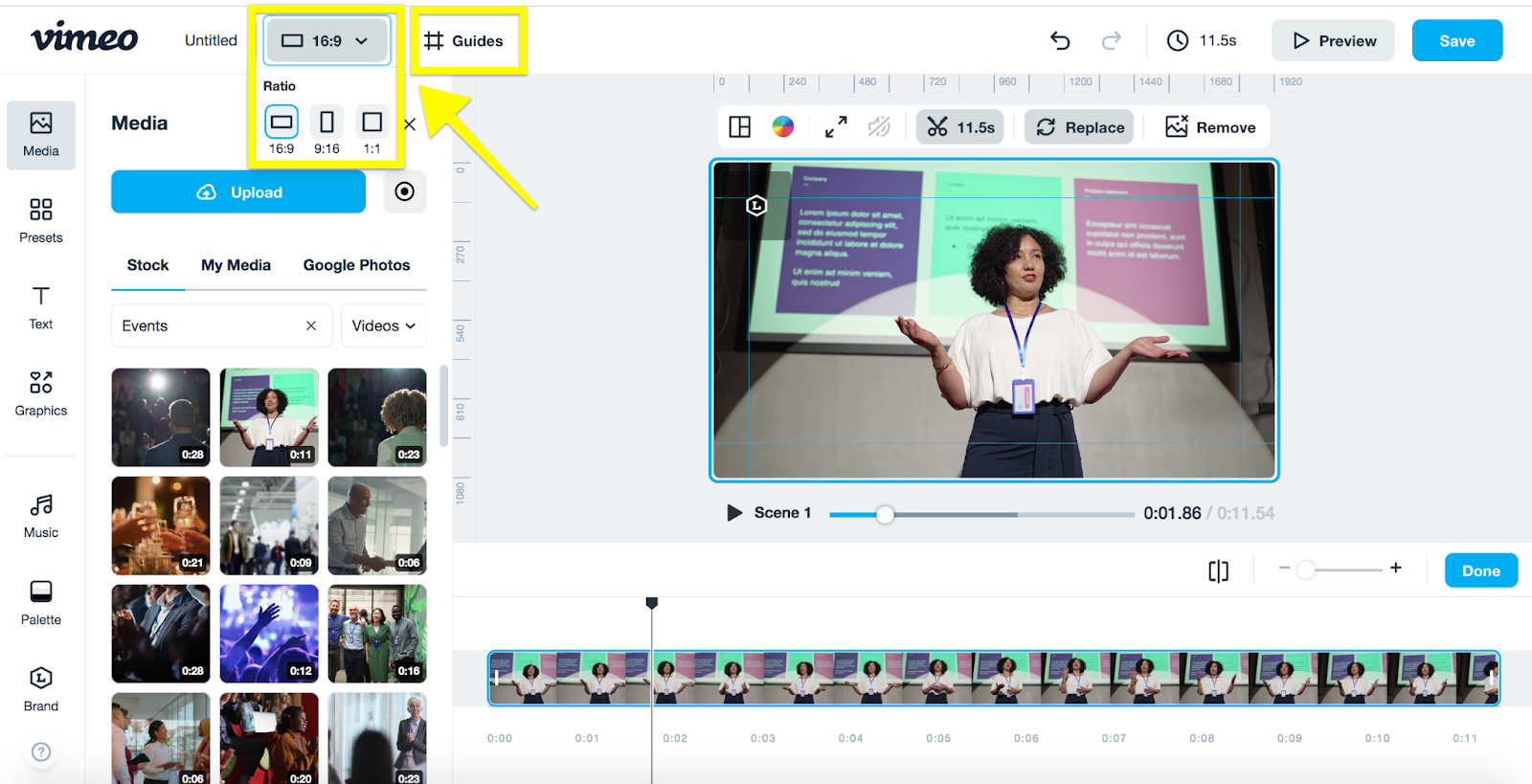
Vimeo is an online video platform for hosting, managing, and sharing video content with greater control over playback, privacy, and distribution. The platform provides high-quality video hosting without advertising and offers tools that support collaboration, secure content management, and distribution across websites and other channels.
Key features:
- Ad-free video hosting: Videos play without advertisements or external recommendations.
- High-quality playback: Ensures videos stream in their highest available resolution across devices.
- Collaboration and review tools: Enables teams to share drafts, collect time-coded comments, and manage version history.
- Customizable video player: Allows users to embed videos with a player that can be customized for branding and website integration.
- Privacy and access controls: Provides security options such as password protection and granular access management for video content.

Source: Vimeo
Dailymotion

Dailymotion is an online video platform that allows users, creators, publishers, and advertisers to share and discover video content. The platform positions itself as a media environment that enables storytelling and content discovery across a global audience. In addition to its main video platform, Dailymotion provides tools and services for content management, advertising, and video distribution through customizable player solutions.
Key features:
- Video sharing platform: Provides a space for users and creators to upload and share video content with audiences worldwide.
- Content discovery system: Uses a recommendation algorithm designed to broaden content discovery and expose viewers to diverse topics.
- Customizable player solutions: Offers tools such as Dailymotion Pro for managing content and distributing videos through customizable players.
- Advertising capabilities: Provides video advertising solutions that allow advertisers to reach audiences through video inventory.
- Media distribution environment: Supports collaboration between creators, publishers, advertisers, and viewers on a single video platform.

Source: Dailymotion
Online video platforms for marketing
Kaltura for Video Marketing

Kaltura is a leading enterprise video platform for marketers who want to turn every video into a growth engine with AI-powered tools that scale video touchpoints and transform content into personalized, measurable experiences. Kaltura’s AI helps marketers maximize the value of their existing content, turning single-use content into a marketing flywheel focused on optimal engagement and conversion.
Key features:
- Engaging branded events and webinars: including a live-session AI assistant, sentiment analysis, and an email generator to help increase engagement and focus.
- Personalized content journeys: The platform guides attendees before, during, and after an event with interactive and AI-driven content recommendations..
- AI-powered repurposing: It automatically identifies and extracts high-value clips and highlights from your video library, turning long-form videos into campaign-ready clips, social content, and follow-up emails.
- Real-time engagement: It enables polls, chat, Q&A, and breakout rooms to drive participation in virtual and hybrid events.
- Real-time analytics: It provides real-time analytics and first-party data to help optimize content and prove ROI.
- Customer journey connection: Kaltura connects your content strategy across the entire customer journey, from demand generation to sales enablement, prospecting, and customer education.
Wistia

Wistia is a video marketing platform that helps organizations host, manage, and analyze video content. It combines video hosting, webinar tools, and analytics into a single system designed for marketing teams. The platform allows users to record and edit videos, organize video libraries, embed videos on websites, and integrate engagement data with other marketing tools.
Key features:
- Video hosting and management: Upload and organize videos using folders, filters, and tags to manage content libraries.
- Ad-free customizable player: Embed videos with a customizable player that does not display third-party ads.
- Webinar hosting: Host branded webinars and reuse recordings as ongoing content.
- Recording and AI editing tools: Record videos using a laptop and apply AI-powered editing tools to refine content.
- Viewer engagement analytics: Track how viewers interact with videos and connect that data with marketing platforms.

Source: Wistia
Vidyard

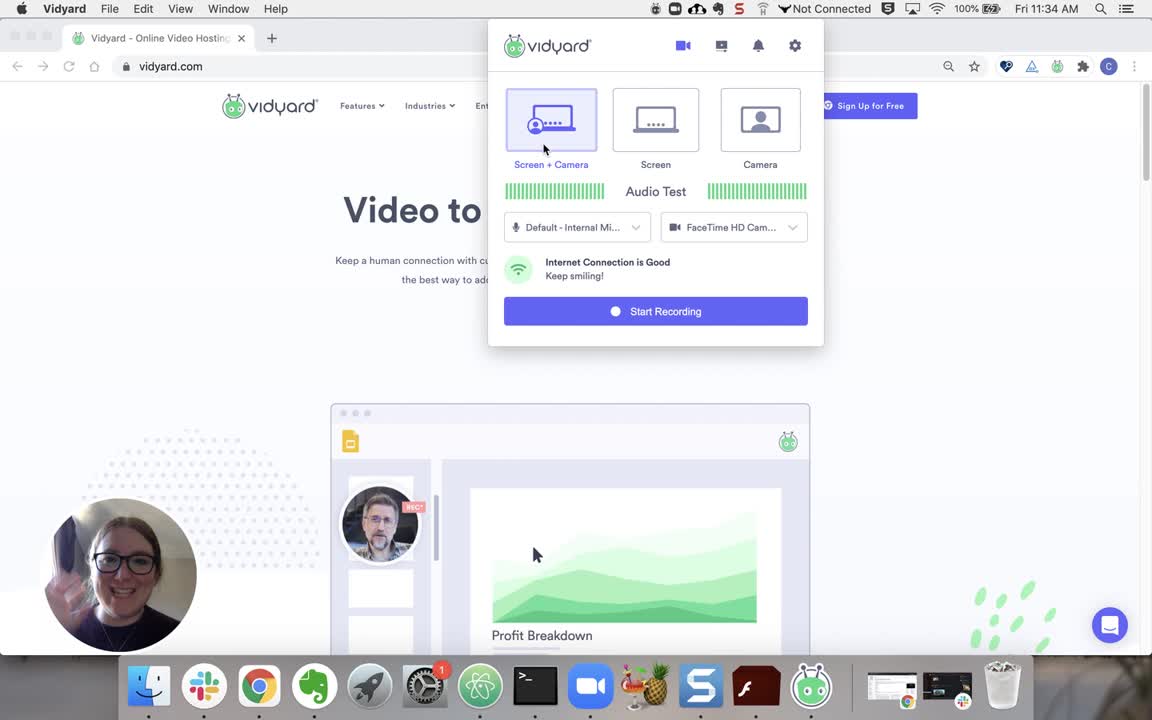
Vidyard is a video platform for sales and revenue teams to create and share personalized video messages with prospects and customers. The platform enables users to record or upload videos, distribute them through email or other channels, and track viewer engagement. By integrating with go-to-market tools, Vidyard helps organizations use video to improve communication with buyers and monitor engagement metrics.
Key features:
- Video recording and uploading: Users can record new videos or upload existing content using browser tools or extensions.
- Personalized video sharing: Send video messages directly through email or other outreach channels.
- Viewer tracking and notifications: Receive alerts when videos are viewed and track viewer engagement.
- Integration with sales tools: Connect video activity with existing go-to-market technology stacks.
- Engagement insights: Analyze viewer behavior such as who watched a video and how long they engaged with it.

Source: Vidyard
InVideo

InVideo is a video creation platform that enables users to produce videos using AI-powered tools and templates. It allows creators to generate videos from ideas, prompts, or templates, making it possible to create advertising videos, explainer videos, and other visual content without traditional video production workflows. The platform also provides tools for voiceovers, captions, and editing through a simplified interface.
Key features:
- AI video generation: Create videos from ideas or prompts using automated production tools.
- Template-based creation: Choose from templates designed for different types of videos, such as marketing or storytelling.
- AI voice and audio tools: Generate voiceovers and background audio for videos.
- Caption generation: Automatically add captions to video content.
- Integrated editing interface: Edit videos using a simplified interface that supports multiple media elements.

Source: InVideo
Online video platforms for live streaming
Kaltura for Live Streaming
Kaltura’s live streaming platform is a flexible and scalable solution for creating, managing, and delivering high-quality live events like webinars and events. With an AI-first approach, Kaltura provides tools for everything from live production and interactive engagement to post-event repurposing, making every event a long-term asset. It helps organizations transition from a one-time event to an always-on content engine.
Key features:
- Event production suite: Features for producing polished live events, including professional-grade studio tools, branded streaming, and real-time captions and translations.
- Audience engagement: Tools like polls, chat, Q&A, and breakout rooms facilitate participation and interaction during events.
- Hybrid event support: The platform simplifies the management of hybrid events by providing a seamless experience for virtual attendees.
- Live-to-VOD workflows: Automatically turn live streams into on-demand assets and create unified hybrid experiences that bridge physical and digital events.
- AI-driven content repurposing: The platform uses AI to automatically identify key moments in live events, extract high-value clips, and turn them into campaign-ready content for social media, follow-up emails, and promotional materials.
- Smart search: AI-powered search makes live-stream content fully searchable, allowing viewers to quickly find relevant topics and information within a video.
Twitch

Twitch is a live-streaming platform where people broadcast and watch real-time video content while interacting with communities through chat. Originally focused on video games, the platform now hosts streams across multiple categories such as music, talk shows, sports, travel, and casual conversations. It enables creators to build communities around their content while viewers participate through live interaction during broadcasts.
Key features:
- Live streaming platform: Allows creators to broadcast live video to audiences in real time.
- Interactive chat communities: Viewers communicate with streamers and other users through live chat during broadcasts.
- Diverse content categories: Supports streams across gaming, music, talk shows, sports, travel, food, and other topics.
- Community building tools: Enables creators to grow audiences and interact directly with viewers during live sessions.
- Developer ecosystem: Provides tools and extensions that allow developers to build custom features for communities.

Source: Twitch
Dacast

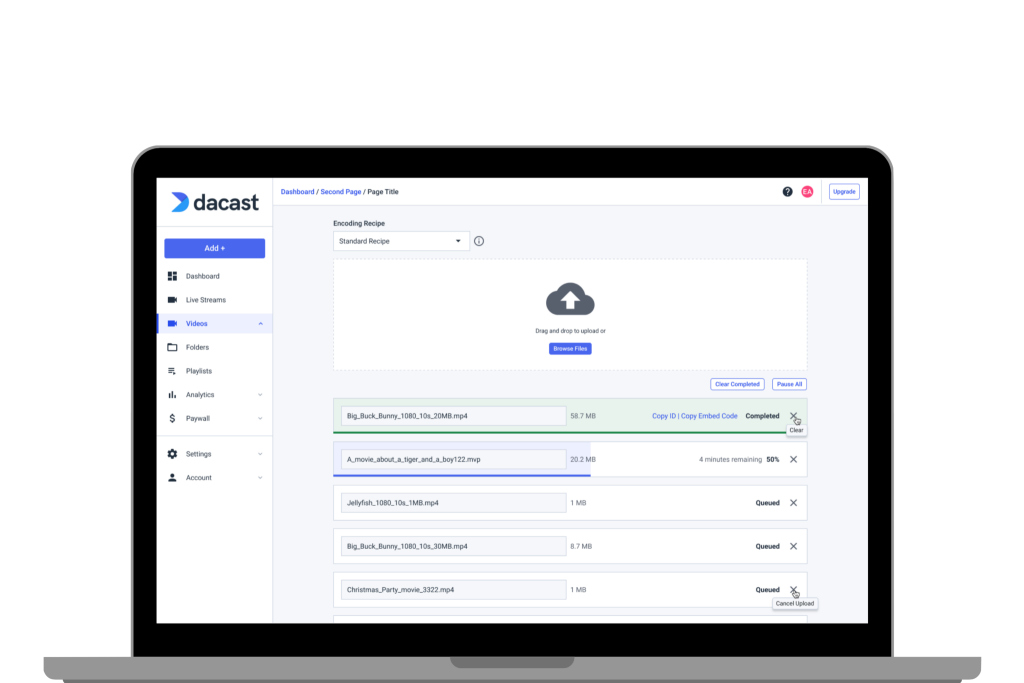
Dacast is a professional video streaming platform for organizations that need to host, broadcast, and monetize video content. The platform provides tools for live streaming, video-on-demand management, and secure video hosting. It is used by businesses, media organizations, event producers, and other groups that require reliable video delivery and scalable streaming infrastructure.
Key features:
- Live streaming capabilities: Broadcast live events with reliable streaming infrastructure.
- Secure video hosting: Protect video content using secure hosting within an integrated streaming platform.
- Video monetization tools: Generate revenue through monetization options built into the platform.
- Content delivery infrastructure: Uses content delivery networks (CDNs) to distribute video content globally.
- Video-on-demand management: Manage both live streams and on-demand video content through platform APIs.

Source: Dacast
VPlayed

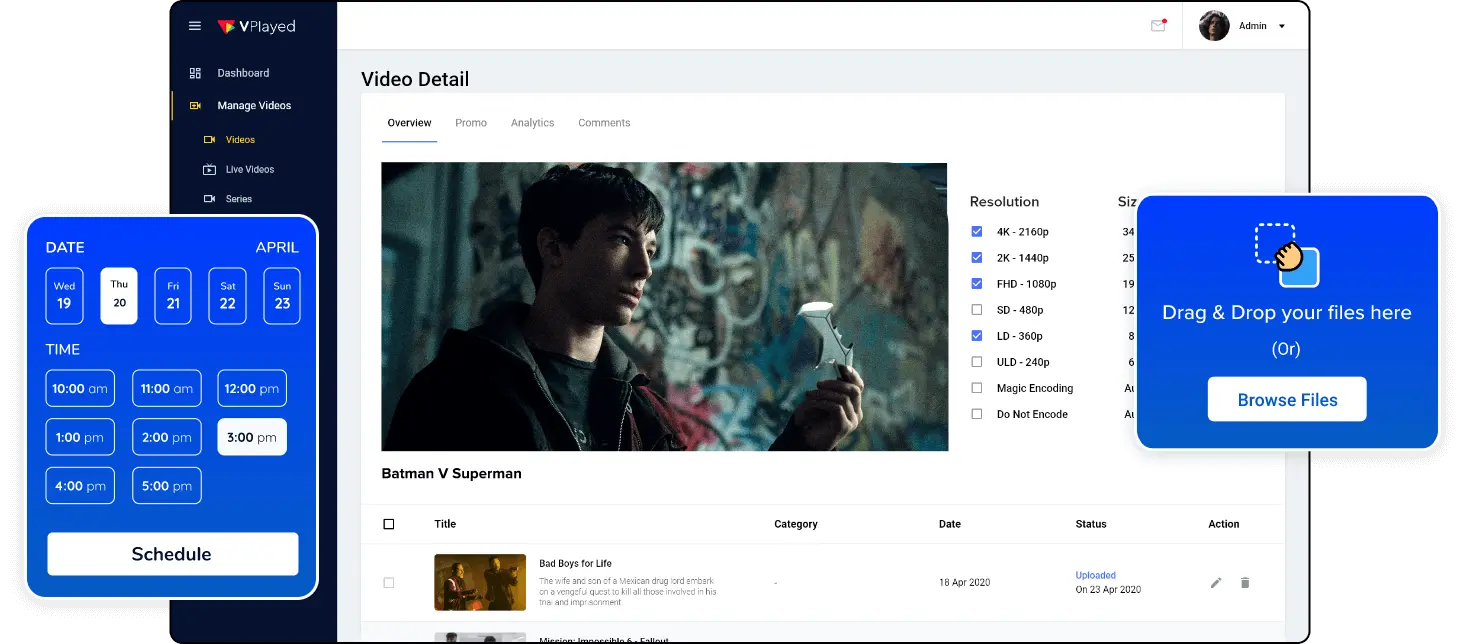
VPlayed is an OTT video platform that allows organizations to build and operate customized video streaming services. The platform provides tools to distribute live and on-demand content across web, mobile, and smart TV environments. It focuses on enabling businesses and media companies to maintain control over branding, monetization, and content management when launching their own streaming platforms.
Key features:
- Customizable OTT platform: Enables organizations to build fully branded streaming services tailored to their needs.
- Multi-platform delivery: Distribute video content across web browsers, mobile applications, and smart TVs.
- Flexible deployment options: Deploy the platform in cloud environments or on-premise infrastructure.
- Content management tools: Upload, organize, and schedule video releases using an integrated CMS.
- Multiple monetization models: Supports subscription, advertising, transactional, and hybrid revenue models.

Source: VPlayed
Online video platforms for training
Kaltura for Video Training
Kaltura’s Training Platform is designed to upskill, reskill, and boost employee learning and development with powerful, branded video experiences. The platform offers the educational and collaborative features needed to keep employees competent and satisfied. It is easy to use and does not require designers or IT for setup.
Key features:
- Easy setup: Quickly create video-based training sessions for onboarding, team training, or large-scale webcasts using customizable templates.
- Knowledge retention: Maximize learning with multimedia playlists, whiteboards, chat, polls, quizzes, and breakout rooms.
- On-demand accessibility: Record sessions so employees can catch up easily, regardless of their schedule.
- Smooth sessions: Prepare sessions ahead of time by uploading files and multimedia, and work on a shared whiteboard with participants.
- Tech you can trust: Your training sessions are powered by Kaltura’s robust video technology, which adheres to the highest enterprise standards.
Docebo

Docebo is an AI-powered learning platform that delivers training programs for employees, partners, and customers. The platform supports the creation, management, and analysis of learning content while integrating automation and AI-driven personalization. It is used by organizations to build scalable training programs, track learning outcomes, and connect training initiatives with workforce development.
Key features:
- AI-assisted content creation: Build interactive courses and learning experiences using AI-powered tools.
- Automated learning management: Manage training programs, users, and workflows from a centralized platform.
- Skills-based learning insights: Connect learning activities with workforce skills and capability development.
- Integration with enterprise tools: Connect with systems such as Microsoft Teams, Salesforce, Zoom, and Google Drive.
- Analytics and performance measurement: Monitor how training affects productivity, retention, and business outcomes.

Source: Docebo
TalentLMS

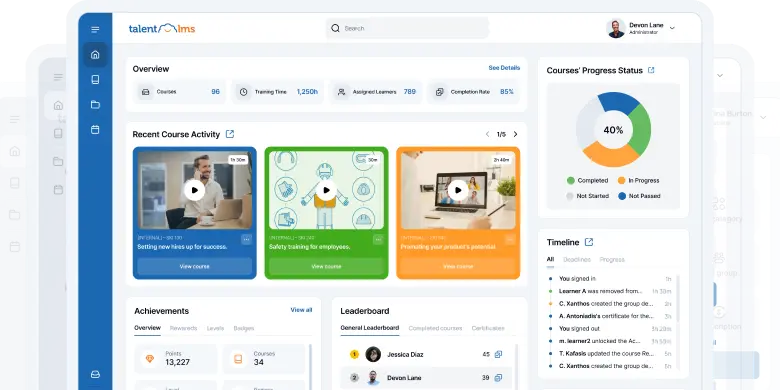
TalentLMS is a cloud-based learning management system that enables organizations to deliver and manage training programs. The platform is designed to simplify course creation, learner management, and training delivery across different audiences. With AI-assisted tools and customizable portals, organizations can launch training programs quickly and scale them as their workforce grows.
Key features:
- AI-assisted course creation: Generate training materials and learning content using built-in AI tools.
- Rapid platform setup: Launch training portals quickly with minimal technical configuration.
- Scalable training delivery: Manage training programs for employees, partners, or customers through a single platform.
- Customizable learning portals: Adjust branding, layouts, and language settings to match organizational needs.
- Progress tracking and analytics: Monitor learner performance and training outcomes with reporting tools.

Source: TalentLMS
Notable online video platforms for corporate communications
Kaltura for Corporate Communications
Kaltura’s Corporate Communications platform provides an all-in-one solution for creating, managing, and distributing internal and external video content securely and at scale. It empowers organizations to improve internal communication, streamline operations, and enhance employee engagement with powerful live and on-demand video tools. It is the only platform built to manage the full lifecycle of internal communication, from high-stakes town halls to team updates.
Key features:
- Live and on-demand video: Broadcast live events like town halls or executive updates, and automatically archive them for on-demand access and long-term use.
- Secure streaming: Ensure sensitive content is protected with enterprise-grade security features like single sign-on (SSO), access controls, and detailed permissions. It also includes built-in governance, permissions, and audit trails.
- All-in-one video solution: Create, manage, and distribute all internal and external video communications from a centralized, unified platform. The platform replaces tool sprawl with a secure, structured system that keeps employees aligned and engaged at scale.
- AI-powered tools: Use built-in AI for content discovery, including personalized content feeds and intelligent search, as well as Kaltura’s AI Genie, which provides personalized video learning journeys with summaries and accurate answers.
- Employee engagement: Drive participation and interaction with features like polls, chat, and Q&A. The platform also uses deep insight analysis and AI-powered engagement tools to make communications a business driver.
- Seamless integrations: Integrate with existing enterprise software, including learning management systems (LMS), SharePoint, and other intranets for streamlined workflows.
- Centralized content management: Employees can explore, search, and self-serve knowledge from a centralized, searchable portal. The platform also allows for the creation of custom libraries for teams or initiatives.
Brightcove

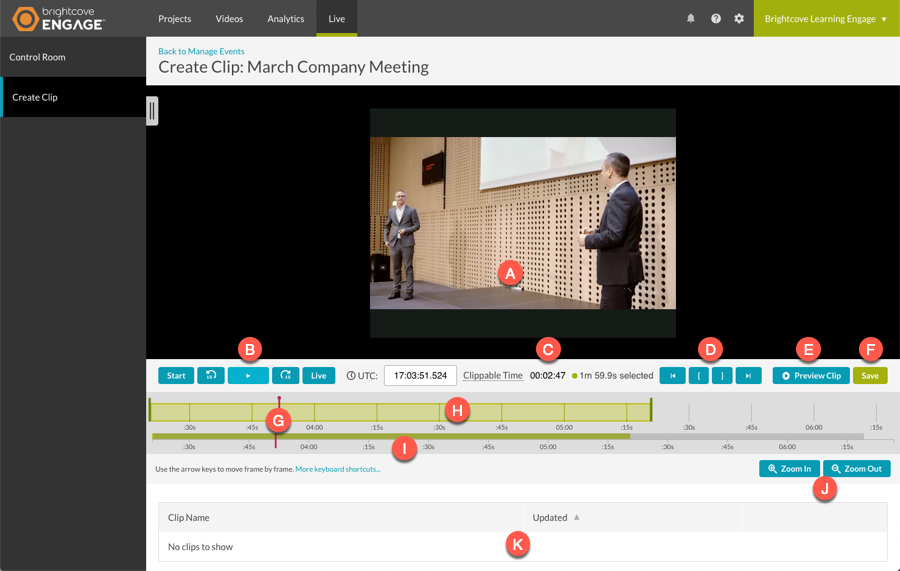
Brightcove is a video technology platform that helps organizations deliver live and on-demand video experiences. It provides tools for hosting, managing, and distributing video content while supporting analytics, monetization, and integration with enterprise systems. The platform enables organizations to use video for marketing, internal communications, and content distribution.
Key features:
- Centralized video management: Upload, organize, publish, and track video content through a unified platform.
- Live and on-demand streaming: Broadcast live video and convert streams into on-demand assets.
- Advanced analytics: Analyze viewer behavior and engagement metrics to improve video performance.
- Interactive video features: Add chat, Q&A, and other engagement tools to live video experiences.
- Developer integrations: Use APIs and SDKs to integrate video capabilities into custom applications and platforms.

Source: Brightcove
IBM Video Streaming

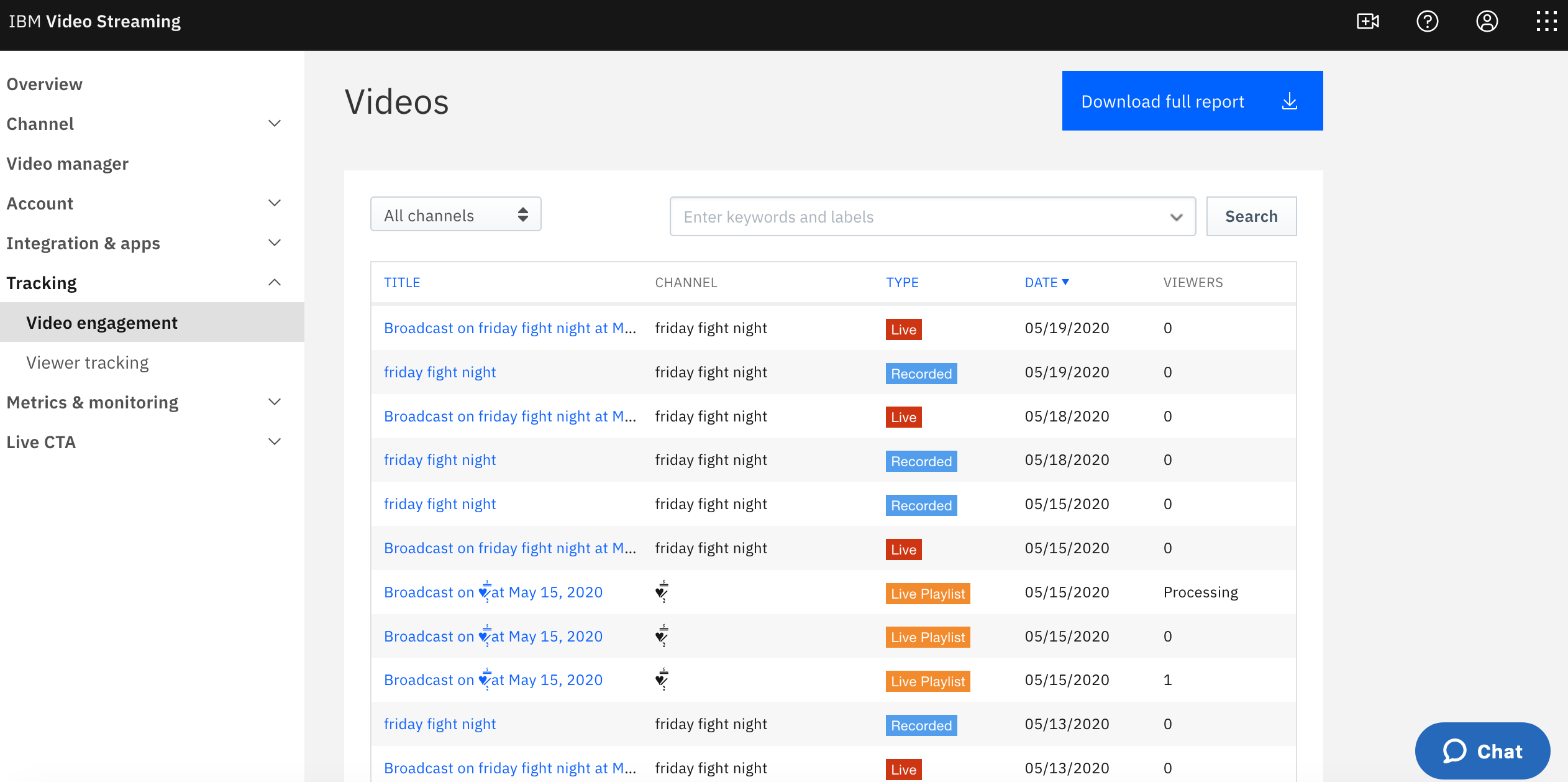
IBM Video Streaming is an enterprise video platform that delivers live and on-demand video content securely at large scale. The platform supports virtual events, corporate communications, and digital broadcasts while emphasizing security, reliability, and global distribution. Powered by IBM Watson AI, it provides automated capabilities such as captioning, video search, and analytics to improve video management and audience engagement.
Key features:
- AI-powered video automation: Use Watson AI for automated captioning, analytics, and searchable video transcripts.
- Global content delivery: Reach large audiences through a multi-CDN infrastructure for worldwide streaming.
- Enterprise security controls: Protect video content with encryption, access controls, and user authentication.
- Live and simulated live streaming: Broadcast real-time events or scheduled streams that appear live to viewers.
- Customizable video portals: Create branded portals or integrate video experiences into external websites through APIs.

Source: IBM
Conclusion
Online video platforms now serve as critical infrastructure across marketing, learning, communications, and media delivery. Whether you need simple sharing tools or enterprise-grade video management, the right OVP can simplify workflows, increase engagement, and amplify your message. Choosing the best platform depends on your use case, audience, and long-term content strategy.
Was this post useful?
Thank you for your feedback!