

Video Platforms: Key Capabilities & 10 Solutions to Know in 2026
A video platform is a digital service or software to host, manage, and deliver video content to media audiences, customers, or employees.

Video content has become dominant in how we communicate, learn, market, and entertain. Video platforms allow businesses to manage and distribute video at scale. Learn about the main platform categories, understand key features, and evaluate top solutions to supercharge video management.
This is part of a series of articles about data security.
Editor’s note: Updated the article to cover video platform market trends, updated information about video platforms to reflect features and capabilities in 2026.
What is a video platform?
A video platform is a digital service or software to host, manage, and deliver video content to media audiences, customers, or employees. It enables content creators and viewers to engage with video material through streaming or downloading.
Video platforms provide functionalities such as uploading, editing, distributing, and monetizing video content. They cater to different needs, from entertainment and education to marketing and enterprise communication. By using video platforms, individuals and organizations can reach broader audiences and improve content accessibility.
Video platforms have become integral to business operations due to the growing demand for online video content. They offer user-friendly interfaces and backend tools to simplify video management and distribution. As video consumption rises, these platforms continue to adapt, providing solutions for content creators and organizations of all sizes.
Why are video platforms essential for modern businesses?
Video platforms have significant benefits for organizations operating in the digital economy:
- Reach broader audiences: Deliver video content across all your channels, devices, and geographies to maximize reach.
- Improve engagement: Use interactive features like polls, chats, and Q&A to captivate viewers and measure engagement.
- Enhance communication: Use video to communicate more effectively across distributed teams and engage customers.
- Gain insights: Get in-depth analytics on video performance, audience behavior, engagement metrics, and ROI.
- Monetize content: Implement flexible monetization models to generate revenue from video content.
- Streamline workflow: Centralize video management, automate processes, and integrate with other business tools.
- Ensure security: Protect sensitive video content with enterprise-grade security and access controls.
Related content: Read our guide to video content management systems
Video platform market trends
According to recent market research, the online video platforms market is expanding steadily as organizations and media companies increase their use of video. The market is valued at USD 1.23 billion, and is projected to reach USD 2.57 billion by 2031. This represents a 13.1% compound annual growth rate (CAGR).
Many organizations now rely on video for training, onboarding, executive messaging, and internal communication. The enterprise video segment is expected to grow from USD 23.8 billion to USD 35.8 billion by 2029. Companies are adopting tools such as AI-generated avatars and automated translation, which reduce production time and allow content to reach global audiences.
Several segments shape the structure of the video platform market:
- Live streaming accounted for 47.35% of the market in 2025, reflecting strong demand for real-time content such as sports, events, and corporate broadcasts.
- Video analytics is one of the fastest-growing segments, expected to grow at a 17.8% CAGR through 2031, as organizations increasingly rely on engagement metrics and automated insights.
- Video on demand (VoD) held 59.10% of the market share in 2025, driven by large content libraries and flexible viewing. Nevertheless, live streaming is expanding faster, supported by interactive features and real-time audience engagement.
Several technological shifts are influencing how video platforms evolve:
- The rapid rise of mobile video consumption is another key trend. More than 70% of viewers watch streaming content on smartphones, and in some emerging markets, the share exceeds 80%.
- Advances in 5G networks are enabling new video experiences. Low-latency connections and higher bandwidth allow formats such as 8K live streaming, multi-angle sports coverage, and interactive AR or VR video experiences.
Categories of video platforms
Video platform solutions typically fall into one of the following categories:
Online video platforms (OVPs)
Online video platforms (OVPs) host, manage, and distribute video content over the internet. They serve a broad range of users, from individual creators to organizations and media organizations. These platforms allow users to upload videos, organize content into playlists or channels, and share videos publicly or privately.
Key features of OVPs include audience analytics, video monetization options, and content security controls. Some platforms support live streaming, allowing real-time audience engagement. Others provide tools for video editing, captions, and branding customization. OVPs are widely used in marketing, entertainment, education, and corporate training.
Video conferencing solutions
Video conferencing solutions enable live communication through video and audio, allowing users to connect remotely for meetings, webinars, and virtual events. These platforms support organizations, educational institutions, healthcare providers, and customer service teams by enabling face-to-face interactions without physical presence.
Core functionalities include screen sharing, chat messaging, recording, breakout rooms for smaller discussions, and integrations with productivity tools. Many solutions offer enhanced security features like end-to-end encryption and user authentication to protect sensitive conversations. Advances in AI have introduced features such as automated transcription, background noise reduction, and real-time language translation.
Enterprise video platforms
Enterprise video platforms like Kaltura Video Portal are specialized solutions for managing and distributing video content within organizations. These platforms support corporate training, employee communication, and knowledge sharing while ensuring high security and compliance with industry regulations. Features include live streaming for company-wide announcements, enterprise video portals, AI-powered search for content discovery, and analytics for measuring engagement.
Unlike public video platforms, enterprise solutions often include role-based access controls, ensuring that only authorized users can view or manage content. They integrate with internal systems such as learning management systems (LMS), intranets, and customer relationship management (CRM) platforms.
Video hosting services
Video hosting services provide storage, management, and playback solutions for video content. These services cater to businesses, educators, and marketers who need a reliable way to store and share videos while maintaining control over access and distribution.
Unlike online video platforms that emphasize public content sharing, video hosting services often focus on privacy, security, and embedding capabilities. They allow organizations to host videos on their websites, track viewer engagement through analytics, and integrate with marketing automation tools. Features include customizable video players, password protection, and domain-level restrictions.
Video delivery platforms
Video delivery platforms optimize the streaming and playback of video content across different devices, network speeds, and geographic locations. These platforms ensure that videos load quickly, maintain high quality, and minimize buffering issues, even under high traffic conditions.
They rely on content delivery networks (CDNs) to distribute video files efficiently, using servers positioned around the world to reduce latency. Adaptive bitrate streaming adjusts video quality dynamically based on a viewer’s internet connection, ensuring a smooth playback experience. Video delivery platforms help broadcasters, streaming services, and online learning providers deliver high-quality video content at scale.
Key features to consider when choosing a video platform
Here are some important features to consider when evaluating different video platforms.
1. Video conferencing and collaboration
A reliable video platform should provide high-quality video conferencing and collaboration tools to enable real-time communication:
- High-definition (HD) video and audio, screen sharing, virtual backgrounds, and customizable meeting layouts enhance the user experience
- Integration with tools like Slack, Microsoft Teams, and Google Workspace streamlines workflows
- Breakout rooms, whiteboarding, and live annotations make meetings more interactive
- Cloud-based scheduling, recording, and archiving ensure easy access to sessions for training or reference
- Features for large events include moderation controls, audience segmentation, and waiting rooms
- Interactive tools such as live Q&A, polls, and emoji reactions keep audiences engaged
- CRM integration allows tracking of engagement and lead follow-up
- AI-powered voice recognition and smart summaries help search recorded sessions
2. Engagement features
An engaging video platform should offer interactive elements to captivate audiences and encourage participation:
- Real-time polls, Q&A, live chat, and emoji reactions boost participation during live events
- Gamification elements like quizzes and challenges enhance training and education
- Call-to-action (CTA) buttons, clickable links, and embedded forms drive conversions
- Chapter markers, annotations, and AI-powered highlights improve on-demand engagement
- Personalized recommendations and AI-driven suggestions enhance viewer retention
- Adaptive streaming and multi-language subtitles increase accessibility
- Internal platforms can include discussion forums and comment sections for collaboration
3. AI and automation capabilities
Artificial intelligence (AI) is transforming video platforms by automating tasks and improving user experience:
- Automatic subtitle and caption generation for accessibility and translation
- Smart tagging and metadata automation improve video organization
- Improve video quality via automated real-time optimization
- Personalized content suggestions based on viewer behavior increase retention
- Facial and object recognition improve video search capabilities
- Automated editing tools create highlight reels and remove dead space
4. Content delivery and scalability
A video platform should ensure content delivery and scalability, especially for organizations and media companies serving large audiences:
- Content delivery networks (CDNs) reduce latency by distributing video across global servers
- Adaptive bitrate streaming maintains quality based on user bandwidth
- Cloud hosting and auto-scaling infrastructure handle spikes in traffic
- Geographic redundancy and multi-region deployment reduce downtime
- Peer-to-peer (P2P) streaming improves bandwidth efficiency
- Support for various video formats and codecs ensures device compatibility
- Scalable platforms deliver consistent performance across different environments
5. Content repurposing
Creating video content is time-consuming, so having tools to repurpose and optimize existing videos can help maximize their impact:
- Automated transcription and subtitles enhance accessibility and language support
- AI summarization creates short clips for social sharing
- Clipping, trimming, and annotation tools extract and reuse key moments
- Live sessions can be turned into searchable on-demand libraries
- Speech-to-text and text-to-speech conversion enable content reuse in blogs and podcasts
- Automated highlight reels identify and compile engaging moments
- Repurposing tools extend content life across platforms and formats
6. Monetization options
For many businesses and content creators, the ability to monetize video content is a key consideration:
- Supports subscription (SVOD), transactional (TVOD), and ad-based (AVOD) revenue models
- Built-in payment gateways like PayPal, Stripe, and Apple Pay simplify transactions
- Dynamic ad insertion (DAI) enables targeted advertising
- Offers sponsorships, affiliate marketing, and branded content support
- Paywall integration restricts access to premium content
- eCommerce integrations and shoppable videos support direct sales from the player
- Monetization tools align with varied business models and audience types
7. Analytics and reporting tools
Understanding audience behavior and video performance is crucial for optimizing content strategy:
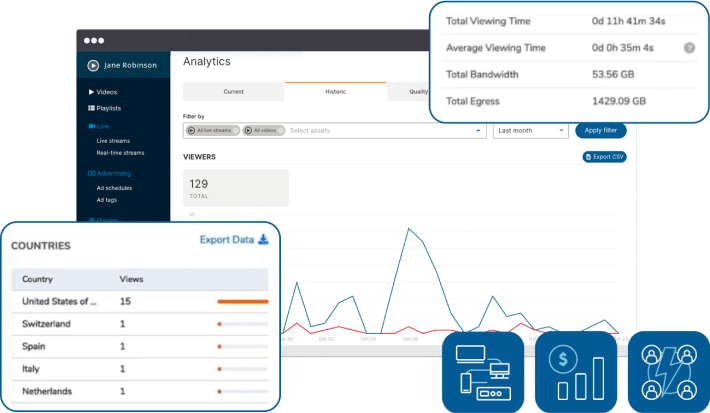
- Detailed data on views, watch time, demographics, and engagement
- Heatmaps highlight the most-watched parts of a video
- Drop-off analysis helps improve content retention
- Integrates with CRMs, marketing platforms, and social analytics tools
- Predictive analytics recommend optimal publish times and improvements
- A/B testing tools compare the performance of different formats or CTAs
- Enables data-driven decisions to refine video strategy
8. Security and privacy features
Security is a critical concern when choosing a video platform, especially for organizations handling confidential information or proprietary content:
- End-to-end encryption (E2EE), multi-factor authentication (MFA), and role-based access control (RBAC) protect content
- Single sign-on (SSO) and identity management integration enhance authentication
- Compliance with GDPR, HIPAA, and SOC 2 is essential for regulated industries
- Digital rights management (DRM) controls access and distribution
- Watermarking, geofencing, and IP restrictions prevent unauthorized sharing
- Audit logs and activity tracking help identify potential security issues
- Password-protected videos, domain-level restrictions, and expiring links provide access control
- Robust security ensures only authorized users can view sensitive content
10 notable enterprise video platforms
1. Kaltura

Kaltura is an enterprise-grade and AI-powered video platform designed to help organizations create, manage, and scale video content hubs. It offers extensive customization, robust security, and built-in tools for content creation, distribution, repurposing, and performance tracking. Kaltura’s Video Portal is fully modular, enabling businesses to tailor their video experiences to their unique needs and branding requirements.
Key features:
- Content hub creation: Build a branded, fully customizable video portal that serves as a centralized destination for all your content.
- Creation and editing tools: Includes built-in self-recording, screen capture, video editing, captioning, and interactivity tools like quizzes.
- Advanced content management: Enables easy search, filtering, tagging, access control, AI-powered repurposing, and social engagement tools to foster community interaction.
- Enterprise-grade security: Implements a zero-trust approach with strict access control policies and flexible permissions management.
- Analytics and insights: Offers in-depth dashboards to monitor engagement metrics and inform content strategy improvements.

2. Vimeo

Vimeo is an enterprise video platform focused on high-quality hosting, collaboration, and secure distribution. It provides tools for managing video libraries, running live events, and monetizing content, while supporting enterprise requirements such as privacy controls, integrations, and AI-based enhancements.
Key features:
- Ad-free video hosting: Delivers high-resolution playback without third-party ads or distractions.
- Collaboration tools: Supports time-coded comments, version control, and shared review workflows.
- Customizable video player: Enables embedding videos with branding and distribution across channels.
- Security and privacy controls: Includes password protection, access management, and SSO integration.
- Live streaming capabilities: Supports webinars, virtual events, and live broadcasts.
- Monetization options: Provides tools for subscriptions and on-demand video sales.
- AI-powered features: Includes translation, captioning, and search optimization tools.

Source: Vimeo
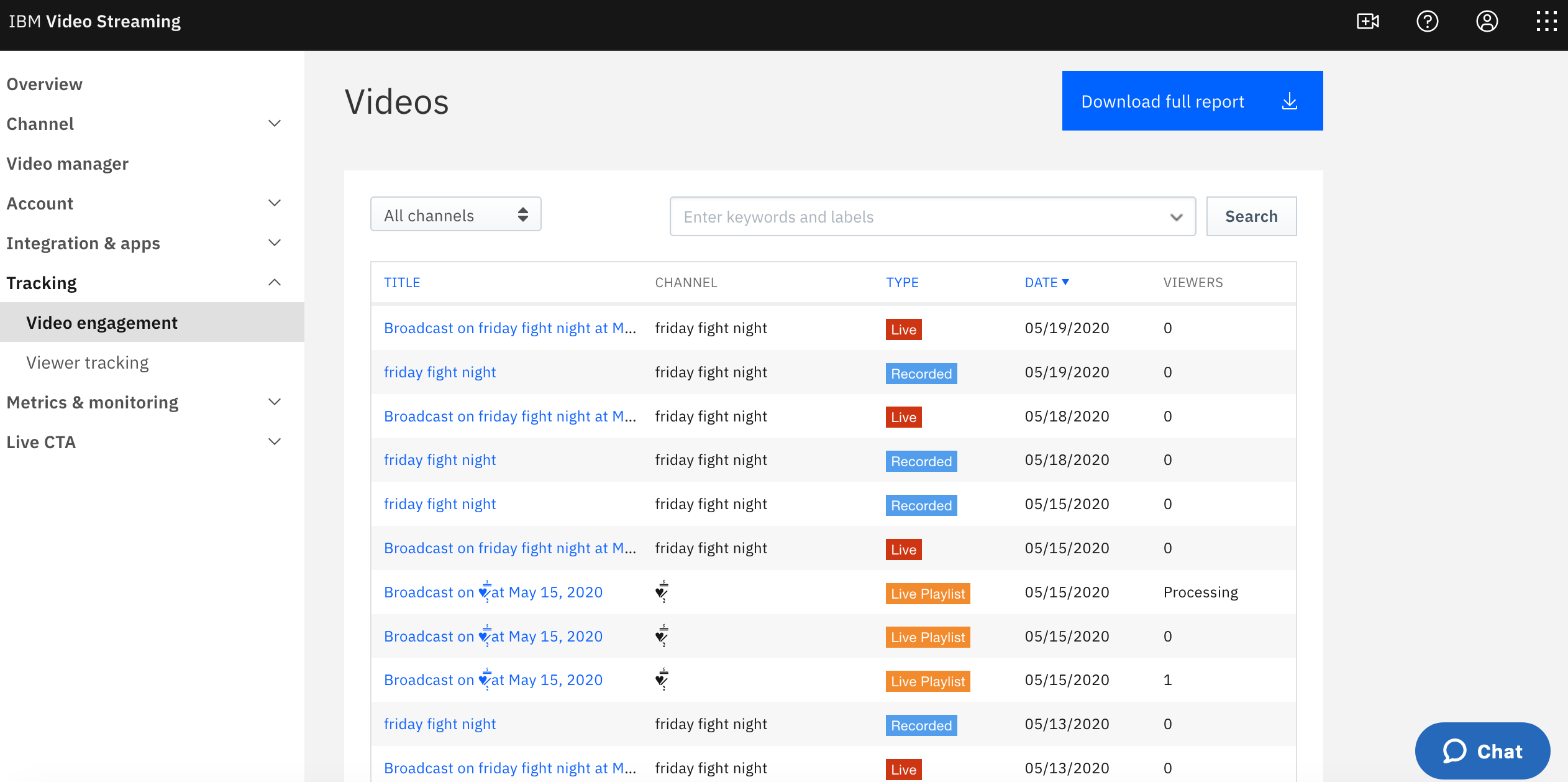
3. IBM Video Streaming

IBM Video Streaming is a platform for large-scale live and on-demand video delivery with a focus on security, reliability, and global reach. It supports enterprise use cases such as virtual events, internal communications, and public broadcasts, while using AI to automate tasks like captioning and search.
Key features:
- AI-driven video search: Uses automated transcription to enable keyword-based search within videos.
- Live and on-demand streaming: Supports live broadcasts, simulated live events, and video libraries.
- Global content delivery: Uses multi-CDN infrastructure to scale to large audiences worldwide.
- Security and access control: Provides encryption, authentication, and controlled access to content.
- Customizable video portals: Enables branded portals and channel pages for organizing content.
- Automated captioning: Generates captions using speech recognition for accessibility.
- Interactive engagement tools: Includes live chat and Q&A during broadcasts.
- Developer APIs: Allows customization and integration with external applications.

Source: IBM
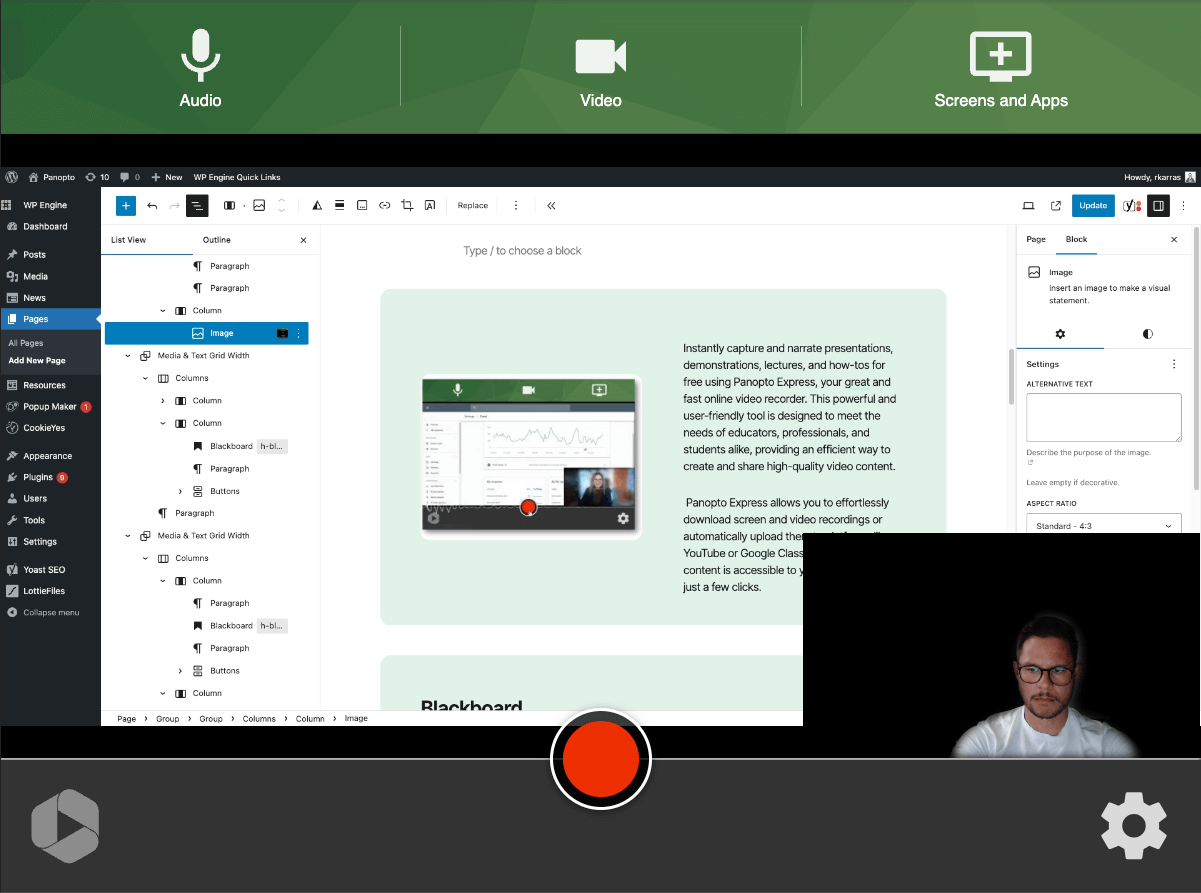
4. Panopto

Panopto is a video platform focused on knowledge management, training, and education. It enables organizations to capture, store, and distribute video content as a searchable knowledge base, with tools for recording, sharing, and integrating video into learning workflows.
Key features:
- Centralized video knowledge platform: Stores and organizes training and institutional knowledge in one system.
- Recording and capture tools: Supports lecture capture, meeting recording, and automated publishing.
- Searchable video content: Enables users to find information within videos using indexed data.
- LMS integration: Syncs with learning systems for structured training and content delivery.
- Interactive learning features: Supports quizzes, assignments, and active learning experiences.
- Accessibility support: Provides automated captions and translation in multiple languages.
- On-demand training delivery: Enables scalable, self-paced learning across teams.

Source: Panopto
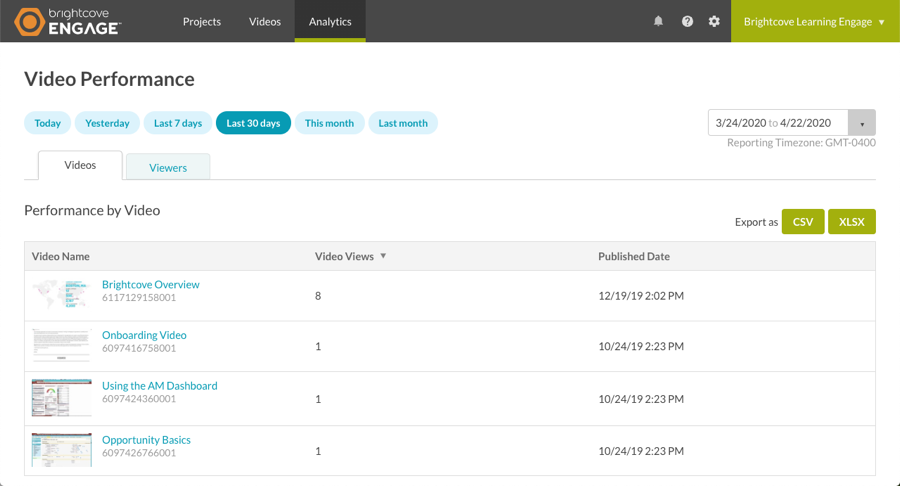
5. Brightcove

Brightcove is a video platform for marketing, media, and enterprise use cases, with a focus on content delivery, audience engagement, and analytics. It provides tools to manage large video libraries, integrate with marketing systems, and measure performance across campaigns.
Key features:
- Video library management: Organizes and controls access to large volumes of content.
- Custom video player: Delivers adaptive streaming with branding and device compatibility.
- Marketing integrations: Connects with CRM, CMS, and marketing automation platforms.
- Advanced analytics: Tracks audience behavior and campaign performance.
- Interactive video features: Adds engagement elements to improve viewer interaction.
- Security controls: Includes SSO, domain restrictions, and permission management.
- Accessibility features: Supports captions and inclusive playback options.
- AI tools: Assists with content creation and localization.

Source: Brightcove
Video Marketing, Sales and Streaming Platforms
5. Wistia

Wistia is a video platform focused on marketing and content performance, combining video hosting, webinar tools, and analytics in a single system. It is designed to help teams manage video assets while tracking engagement and integrating video data into marketing workflows.
Key features:
- Video hosting and management: Organizes content with folders, tags, and a customizable player.
- Webinar hosting: Supports live and recorded webinars with branding and reuse options.
- Recording and editing tools: Enables video creation and AI-assisted editing without external tools.
- Engagement analytics: Provides detailed insights into viewer behavior and performance.
- Marketing integrations: Syncs video data with marketing and analytics platforms.
- Ad-free playback: Ensures controlled viewing experiences without external ads.

Source: Wistia
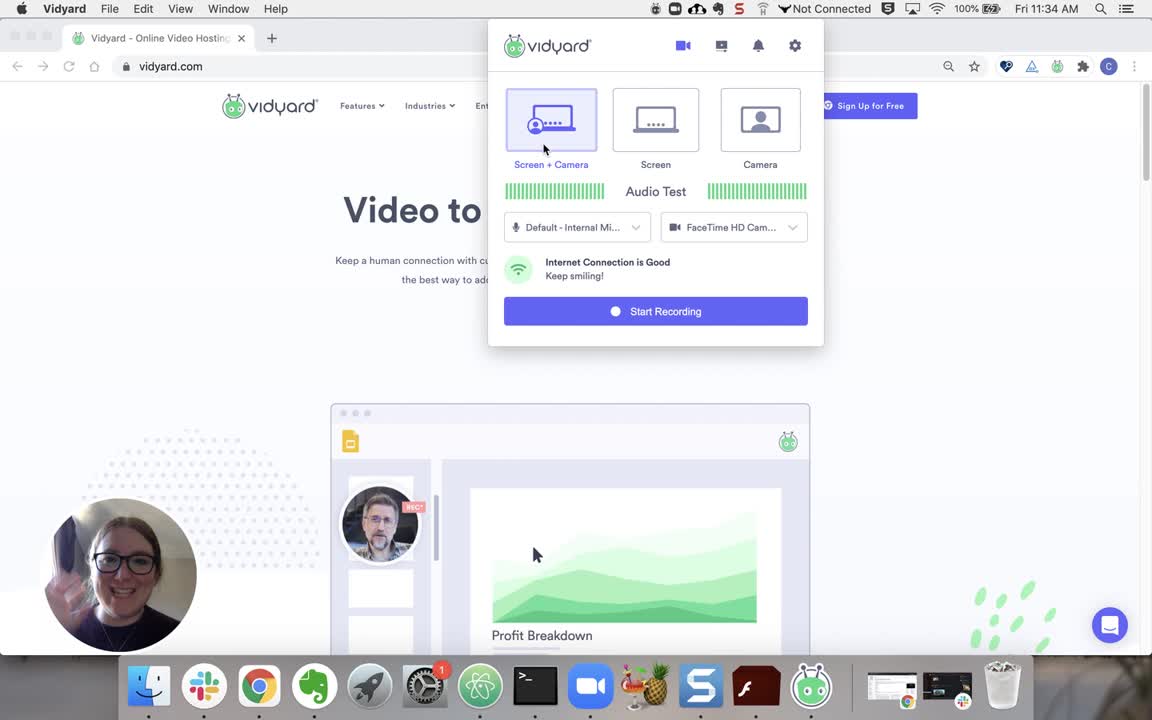
7. Vidyard

Vidyard is a video platform intended for sales and marketing teams, focusing on personalized video communication and performance tracking. It enables organizations to create, manage, and distribute videos that support customer engagement throughout the buyer journey.
Key features:
- Personalized video messaging: Allows creation of custom videos for outreach and communication.
- Centralized video hosting: Stores and manages video content with permissions and organization tools.
- AI-powered video automation: Uses AI avatars and automation for scalable video creation.
- Engagement analytics: Tracks viewer behavior and connects performance to sales outcomes.
- CRM and marketing integrations: Syncs video data with tools like Salesforce and HubSpot.
- Automated workflows: Triggers video outreach based on user behavior and signals.

Source: Vidyard
8. Wowza

Wowza is a video platform focused on streaming infrastructure, offering tools for live streaming, video on demand, and scalable delivery. It supports a range of use cases with an emphasis on performance, customization, and low-latency streaming.
Key features:
- Live and VOD streaming: Supports both real-time and on-demand video delivery.
- Global CDN delivery: Ensures scalable and reliable streaming across regions.
- Adaptive streaming workflows: Optimizes video quality based on network conditions.
- Content management system: Organizes and manages large video libraries.
- Real-time analytics: Provides insights into stream performance and viewer behavior.
- Security features: Includes DRM, token authentication, and access controls.
- Low-latency streaming: Enables near real-time video delivery at scale.
- Developer tools: Offers APIs and SDKs for customization and integration.

Source: Wowza
9. Muvi

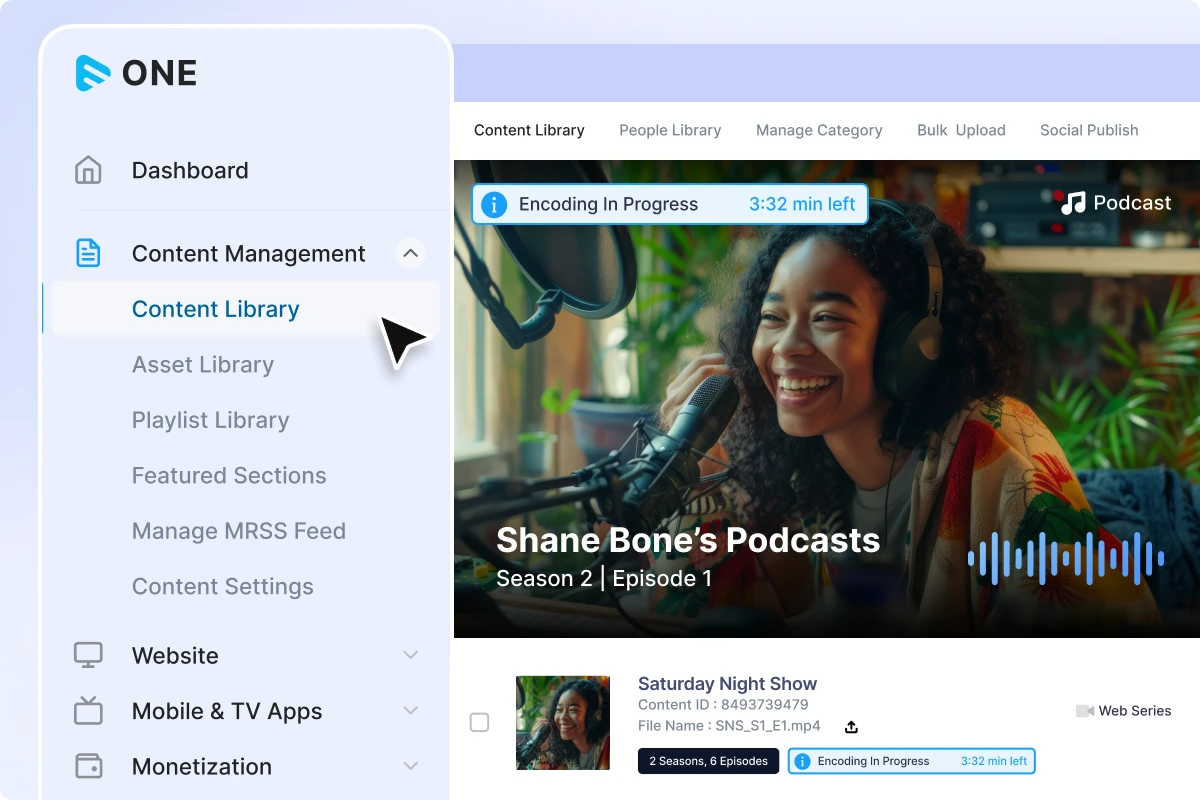
Muvi is a unified streaming platform that enables organizations to build, manage, and distribute video and audio content across multiple devices. It supports live streaming, on-demand content, and OTT services, with tools for monetization and content control.
Key features:
- End-to-end streaming platform: Supports live, on-demand, and audio/video streaming in one system.
- Multi-device distribution: Delivers content across web, mobile, and TV applications.
- Content management tools: Handles hosting, publishing, and organization of media assets.
- OTT and app development: Enables creation of branded streaming services and apps.
- Monetization support: Provides subscription, pay-per-view, and other revenue models.
- Security and DRM: Protects content with encryption, watermarking, and geo-blocking.
- AI-powered compliance tools: Automates detection and handling of policy violations.

Source: Muvi
10. StreamShark

StreamShark is an enterprise video platform focused on live streaming, reliability, and secure content delivery. It provides tools for managing live and on-demand video workflows, with strong emphasis on analytics, access control, and enterprise-grade infrastructure.
Key features:
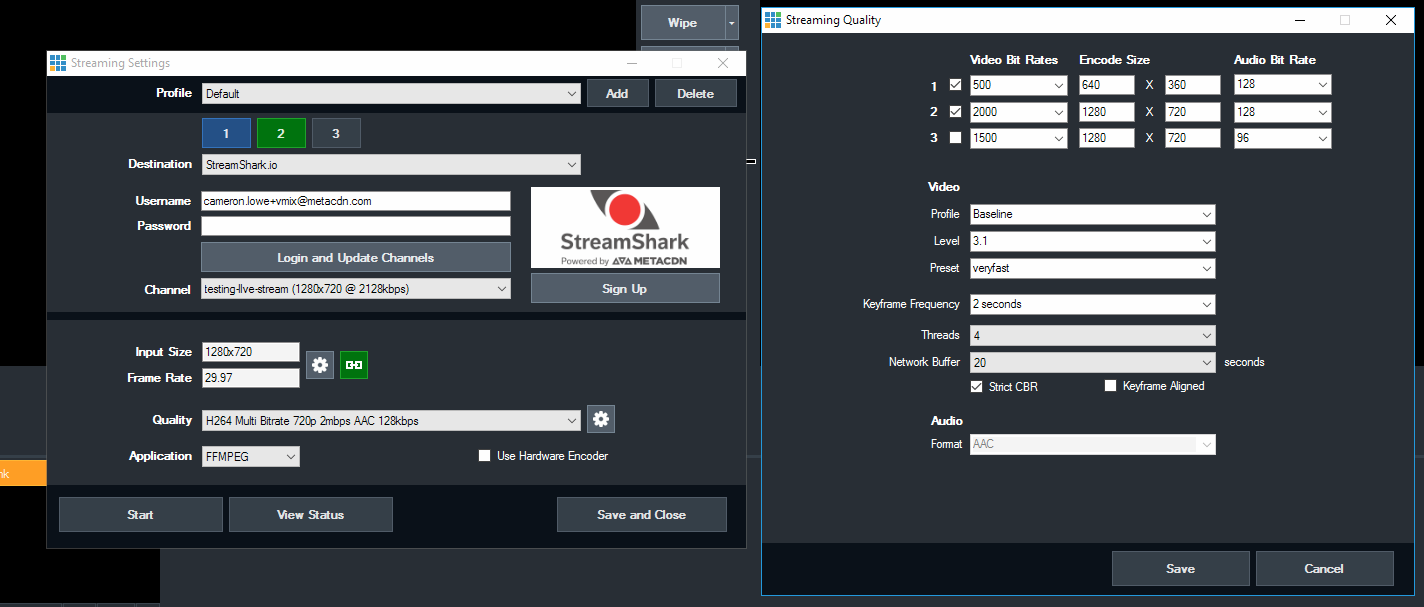
- Live streaming workflows: Supports real-time and simulated live broadcasts with scheduling tools.
- Advanced analytics: Tracks engagement down to the individual viewer level.
- Enterprise security: Includes encryption, DRM, SSO, and detailed access controls.
- AI-powered captions and translation: Generates captions, translations, and voice dubbing.
- Content management system: Organizes video into branded channels and libraries.
- Peer-to-peer delivery: Reduces bandwidth usage within internal networks.
- Encoder management: Controls streaming hardware remotely for production workflows.
- Multi-CDN delivery: Ensures reliable streaming performance at scale.

Source: StreamShark
Conclusion
Video platforms are now a cornerstone of digital communication, learning, and entertainment. From social media content to corporate training and global webinars, video has become one of the most effective ways to share information and engage audiences. Choosing the right video platform is critical for delivering high-quality experiences and meeting your strategic goals.
Was this post useful?
Thank you for your feedback!