





Corporate Learning Management System: 11 Solutions to Know in 2026
A corporate learning management system (LMS) is a software platform that manages, delivers, and tracks training programs within an organization.

Companies today must upskill teams quickly, ensure compliance, and support continuous learning at scale. A corporate LMS helps organizations manage and deliver training at scale. Learn about the top technology solutions that can help you create streamlined, engaging training experiences for employees.
What is a corporate learning management system?
A corporate learning management system (LMS) is a software platform that manages, delivers, and tracks training programs within an organization. This system automates and simplifies training processes, ensuring employees have access to the necessary educational resources.
An LMS centralizes learning content, making it easier for administrators and employees to coordinate training activities without delays. Corporate LMS enables tailored learning experiences, addressing diverse training needs in various departments. These platforms support different content formats, such as:
- Videos
- Quizzes
- Interactive modules
Many organizations are shifting from LMS systems to video platforms, which can provide engaging, accessible training for employees. We’ll review both traditional corporate LMS systems and newer video platforms that provide a compelling alternative. Kaltura is a leading corporate LMS solution focused on video-based training and AI automation.
The evolution of corporate LMS: from traditional to modern solutions
Corporate learning management systems have evolved significantly, transitioning from rigid, instructor-led platforms to dynamic, AI-driven ecosystems.
Early LMS: Basic training repositories
The earliest LMS platforms functioned as digital repositories, primarily used to store and distribute training materials. These systems offered limited interactivity, relying on static content like PDFs and PowerPoint slides. Tracking capabilities were minimal, and training was often conducted in a linear, one-size-fits-all format.
The rise of cloud-based and interactive LMS
As organizations sought more flexibility, cloud-based LMS solutions emerged. These platforms enabled remote access, allowing employees to complete training anytime, anywhere. Features such as quizzes, gamification, and interactive content improved engagement, while automated tracking improved training administration.
Modern LMS: AI, personalization, and integration
Today’s corporate LMS platforms leverage artificial intelligence to offer personalized learning paths based on user progress and skill gaps. Integration with HR systems and analytics tools allows for real-time performance tracking and compliance monitoring. Social learning, microlearning, and mobile accessibility further improve the learning experience.
Corporate LMS market and trends
According to recent market research, the global corporate learning management system (LMS) is valued at USD 14.49 billion and expected to grow to USD 72.30 billion by 2034, representing a compound annual growth rate (CAGR) of 19.65%.
This growth is driven by increased demand for scalable training systems, personalized learning experiences, and tools that support continuous employee development. Companies are investing in LMS platforms to improve training efficiency, compliance tracking, and workforce skill development.
Shift Toward Cloud-Based Deployment
Deployment models are evolving as organizations move from traditional on-premise systems to cloud-based platforms.
On-premise LMS deployments dominated the market, largely due to their strong security features and customization capabilities. Many organizations prefer on-premise solutions when they need strict control over data and system integration.
However, cloud-based LMS platforms are projected to grow the fastest. Cloud solutions allow employees to access training from anywhere, reduce maintenance requirements, and lower infrastructure costs. They also support scalable learning programs, personalized training, and improved learner engagement.
Key Drivers of Market Growth
Several factors are driving the adoption of corporate LMS platforms across industries. Increasing industrialization and rapid technological change are creating a strong need for continuous skill development and employee training. Organizations are adopting LMS software to support onboarding, professional development, compliance training, and extended enterprise education.
LMS platforms also help automate human resource processes such as employee onboarding, reducing administrative workload. As companies invest more in workforce training to improve productivity and performance, demand for corporate learning management systems continues to increase.
Key benefits of implementing a corporate LMS
Implementing a corporate LMS provides organizations with a structured and efficient way to manage employee training and development. Here are some key benefits:
- Centralized training management: An LMS consolidates all training materials in one platform, making it easy to organize, update, and distribute content. This ensures consistency across different departments and locations.
- Improved employee engagement and retention: Interactive learning methods, such as gamification, quizzes, and multimedia content, make training more engaging. Employees are more likely to complete courses and retain knowledge when learning is dynamic and personalized.
- Flexible and scalable learning: Cloud-based LMS solutions enable employees to access training materials anytime, anywhere. This flexibility supports remote work, global teams, and continuous learning at scale.
- Automated tracking and compliance management: Organizations can monitor employee progress, completion rates, and certifications in real time. Some LMS platforms make it possible to track specific training required for compliance with regulations.
- Cost and time efficiency: Traditional training methods require significant time and resources. An LMS reduces the need for in-person sessions, travel, and printed materials, making training more cost-effective and efficient.
- Personalized learning paths: AI-powered LMS platforms analyze employee performance and suggest customized learning paths. This approach helps employees upskill in areas relevant to their roles and career goals.
Essential features of modern corporate LMS
A corporate learning management system should include the following capabilities to support the needs of modern organizations.
1. Personalized learning paths
An essential feature of modern learning management systems is the creation of personalized learning paths. These allow employees to engage with training content relevant to their career objectives, learning styles, and existing skill levels. Customizable learning paths ensure that content delivery aligns with the professional growth of individuals.
The tailored approach caters to specific employee needs across departments and levels. Feedback mechanisms within these systems help users and administrators track progress and adjust learning paths as needed.
2. Video-based learning
Video-based learning is a vital component of modern LMS platforms, offering an engaging and accessible way to communicate complex information. By presenting content visually, videos support better understanding and retention, especially for learners who prefer visual formats. This method is particularly effective for explaining procedures, product features, or technical topics that benefit from demonstration.
Modern LMS platforms improve video learning with interactive features such as embedded quizzes, annotations, and chapter markers. These elements maintain learner attention and reinforce key concepts. Administrators can also track viewer engagement through video analytics, identifying which segments are most effective and where learners tend to disengage.
3. Generative AI Capabilities
Generative AI enables LMS platforms to create and adapt training content at scale. It can generate course outlines, quizzes, summaries, and even full modules based on prompts or existing materials. This reduces the time needed to build training programs and helps teams keep content up to date. AI can also convert documents into structured lessons or transform long-form content into microlearning units.
Beyond content creation, generative AI improves personalization. It analyzes learner behavior, performance, and preferences to recommend next steps or adjust difficulty levels. Some systems also provide AI tutors that answer questions in context, explain concepts, and guide learners through material. This makes learning more responsive and reduces the need for manual instructor support.
4. AI Avatars
AI avatars allow organizations to deliver training through virtual presenters that simulate human instructors. These avatars can present scripts, explain concepts, and guide learners through lessons in a consistent and scalable way. They are especially useful for onboarding, compliance training, and multilingual content, where the same material must be delivered across regions.
Avatars reduce the need for live recordings and repeated video production. Content can be updated by editing scripts instead of reshooting videos, which lowers production costs and speeds up iteration. Many platforms support customization of voice, language, and appearance, allowing organizations to align avatars with their brand and audience needs.
5. Mobile learning and accessibility
Mobile learning and accessibility are crucial in modern corporate LMS, accommodating the growing demand for flexible and remote work environments. Mobile accessibility ensures that employees can access training content on various devices, allowing them to learn on the go or at convenient times.
Such flexibility supports continuous learning, enabling employees to balance their professional development with existing work commitments. Modern LMS platforms offer offline capabilities, expanding learning opportunities even in limited connectivity scenarios.
6. Integration with existing systems
Modern LMS platforms must integrate seamlessly with existing enterprise software to maximize efficiency and data consistency. Integration with HR, performance management, and CRM systems allows LMS to fit into operational processes and enables strategic decision-making.
Through integration, LMS can leverage existing user data to customize learning experiences, offering tailored content recommendations. Streamlined access to LMS through single sign-on (SSO) also improves user convenience and compliance monitoring.
7. Advanced reporting and analytics
Advanced reporting and analytics are indispensable features of modern corporate LMS, providing insights into learning effectiveness and areas needing improvement. Analytics tools enable tracking of individual progress, course completion rates, and engagement levels, which inform data-driven decision-making and strategy refinement.
Detailed reporting identifies trends and patterns in training performance, allowing timely interventions and improvements. With predictive analytics capabilities, organizations can proactively address skill gaps and align training resources with future business needs.
8. Social and collaborative learning tools
Social and collaborative learning tools are crucial in modern LMS, encouraging knowledge sharing and peer interaction. Features such as discussion forums, chat, and peer reviews create an active learning community to support and assist learners.
These tools improve engagement by making learning a participatory process. Collaborative features enable the practical application of knowledge, where learners can discuss real-time problems and share diverse perspectives.
Video-based corporate training systems vs. general purpose corporate LMS
Video-based corporate training systems focus on delivering learning through video as the primary medium, while general-purpose LMS platforms manage the full training lifecycle. Video platforms prioritize content creation, streaming, and engagement features such as interactive playback, captions, and in-video assessments. They are effective for scenarios where demonstration, storytelling, or visual explanation improves understanding, such as product training, onboarding, and technical walkthroughs. These systems often include strong content management and analytics tied specifically to viewer behavior.
General-purpose LMS platforms provide broader capabilities, including course structuring, user management, compliance tracking, certifications, and integrations with HR systems. They are designed to coordinate large-scale training programs across departments and roles. In practice, many organizations combine both approaches by integrating video platforms into their LMS. This allows them to maintain centralized training management while improving content quality and learner engagement through video.
Notable video-based corporate training systems
In addition to traditional corporate LMS, video-based platforms are increasingly used to provide accessible, engaging training to employees. Here are some of the leading solutions.
1. Kaltura

A video-first corporate LMS companion for hybrid learning and beyond, Kaltura redefines the role of video in learning by embedding a fully interactive, flexible, and accessible video layer into any corporate LMS. Trusted across industries, Kaltura supports modern corporate training with tools that make learning more engaging, inclusive, and data-driven.
Key features include:
- Full LMS/VLE integration: Seamlessly embeds into leading LMS platforms, enabling a video-rich learning experience without leaving the LMS.
- Flexible learning formats: Supports flipped classrooms, hybrid sessions, on-demand training, and formal lectures—accessible anytime, anywhere.
- Video creation tools: Includes Personal Capture, live webcasting, and easy upload options to empower all users to contribute content.
- Interactive learning: Engage learners with video quizzes, branched learning paths, hotspots, and searchable course video galleries.
- Accessibility by design: Compliant with 508, CVAA, and WCAG 2.0 AA standards, with features like automatic captions, transcripts, audio descriptions, and chaptering.
- Advanced analytics: Track learner engagement through granular dashboards, user-level heatmaps, and support for xAPI and Caliper for deep reporting.
- Streamlined content management: Organize content into faculty repositories, personal libraries, and course-based playlists, all easily searchable and shareable.

2. IBM Video Streaming
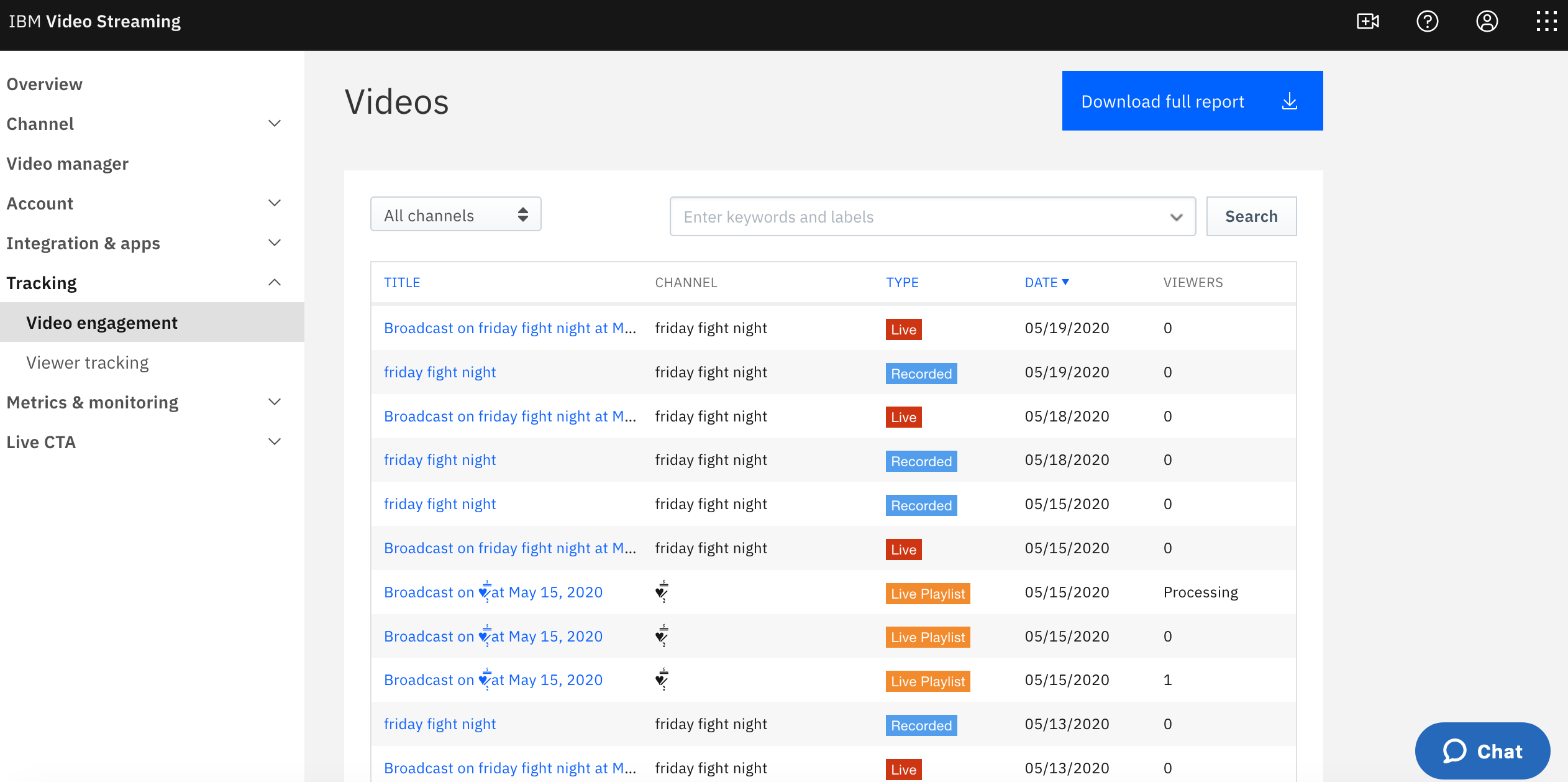
IBM Video Streaming is an enterprise video platform for live and on-demand streaming, with a focus on scalability, security, and AI-driven automation. It supports use cases such as internal communications, training sessions, and virtual events, while providing tools for managing video content and analyzing viewer engagement.
Key features include:
- AI-driven video search: Uses automated transcription to enable keyword-based search and navigation within videos.
- Live and on-demand streaming: Supports live broadcasts, simulated live events, and video-on-demand libraries.
- Automated captioning: Generates captions using AI-based speech recognition for accessibility.
- Enterprise-grade security: Provides encryption, access controls, and authentication options for protected content.
- Global content delivery: Uses multi-CDN infrastructure to stream to large, distributed audiences.
- Customizable video portals: Enables branded portals and channel pages for organizing and presenting content.
- Interactive engagement tools: Includes live chat and Q&A features during streaming sessions.

Source: IBM
3. Panopto

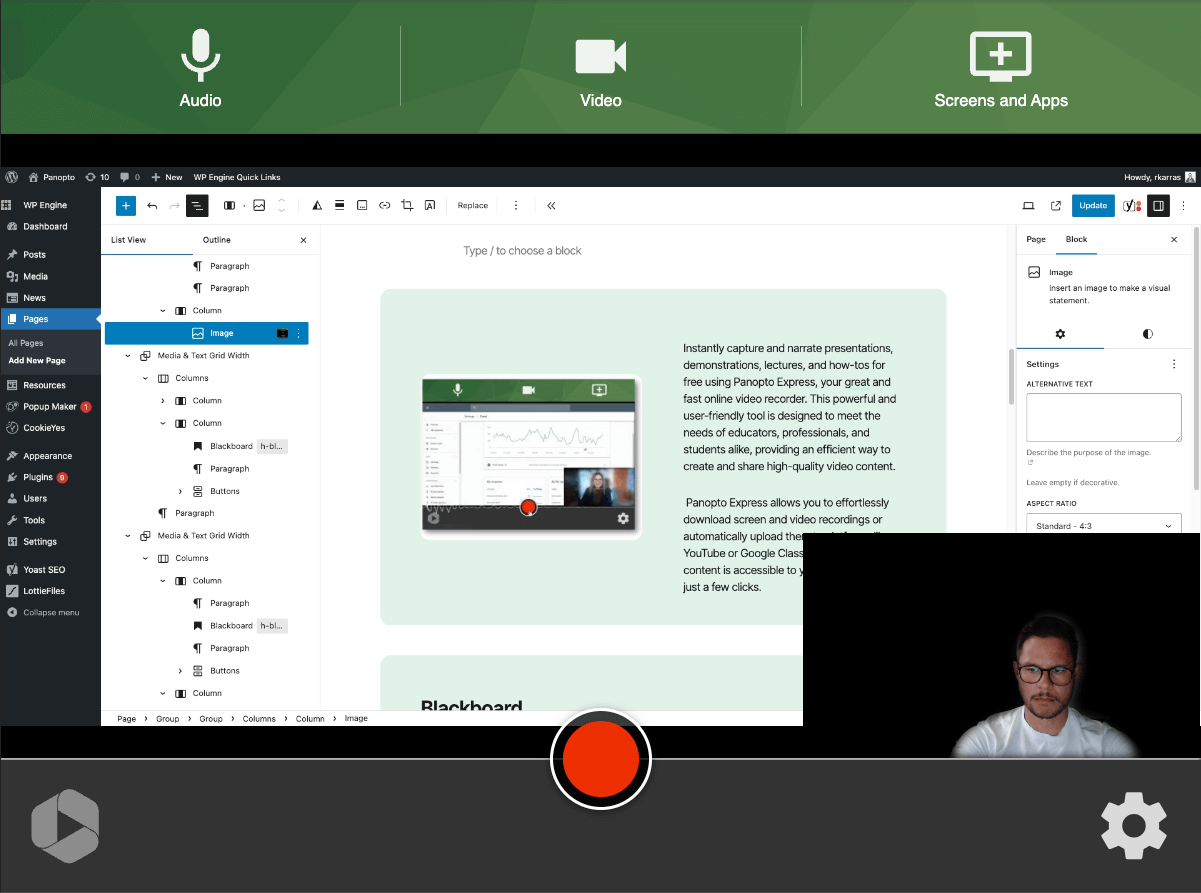
Panopto is a video-based training platform that focuses on simplifying content creation and scaling learning programs through AI-assisted tools. It enables organizations to produce training videos quickly, use avatars for delivery, and enhance engagement through interactive playback features.
Key features include:
- AI-powered video creation: Converts text and ideas into structured training videos using guided storyboarding.
- AI avatars for instruction: Uses virtual presenters to deliver content without requiring live recordings.
- Interactive playback: Supports quizzes, branching, chapters, and embedded links within videos.
- Pre-built templates: Provides reusable templates to standardize training content.
- Multilingual delivery: Supports multiple languages and voice options for global training.
- Content transformation: Converts documents and presentations into video-based lessons.
- Scalable content production: Reduces reliance on external production resources for training materials.

Source: Panopto
4. Echo 360

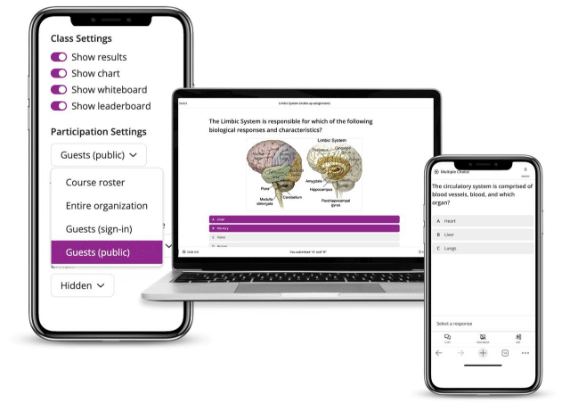
Echo360 is a video-centric learning platform that combines content delivery with interactive engagement tools such as polling and gamification. It is intended to support both live and asynchronous learning while providing detailed tracking of learner participation and performance.
Key features include:
- Interactive polling and gamification: Includes quizzes, leaderboards, and real-time response tools to increase engagement.
- Flexible polling modes: Allows polling both online and offline across devices.
- Attendance tracking: Automatically records participation and generates reports for analysis.
- Content reuse: Enhances existing materials like PowerPoint with interactive elements.
- LMS integration: Syncs learner data, scores, and attendance with LMS platforms.
- Mobile accessibility: Supports participation across mobile, web, and dedicated devices.
- Real-time analytics: Provides insights into learner engagement and comprehension trends.

Source: Echo360
5. Yuja

Yuja is a cloud-based enterprise video platform focused on secure content management, accessibility, and integration with learning systems. It enables organizations to create, manage, and distribute video content while maintaining compliance and tracking engagement.
Key features include:
- Centralized video management: Stores and organizes video content in a secure cloud repository.
- Interactive video playback: Supports quizzes, note-taking, commenting, and multi-stream playback.
- Auto-captioning and accessibility: Provides AI-based captioning and accessibility features.
- Search capabilities: Uses metadata and visual search to locate content within videos.
- Analytics and reporting: Tracks engagement and usage with detailed metrics.
- LMS integration: Embeds video content directly into LMS platforms via LTI.
- Mobile and cross-device support: Ensures playback across devices with adaptive streaming.

Source: YuJa
6. Muvi

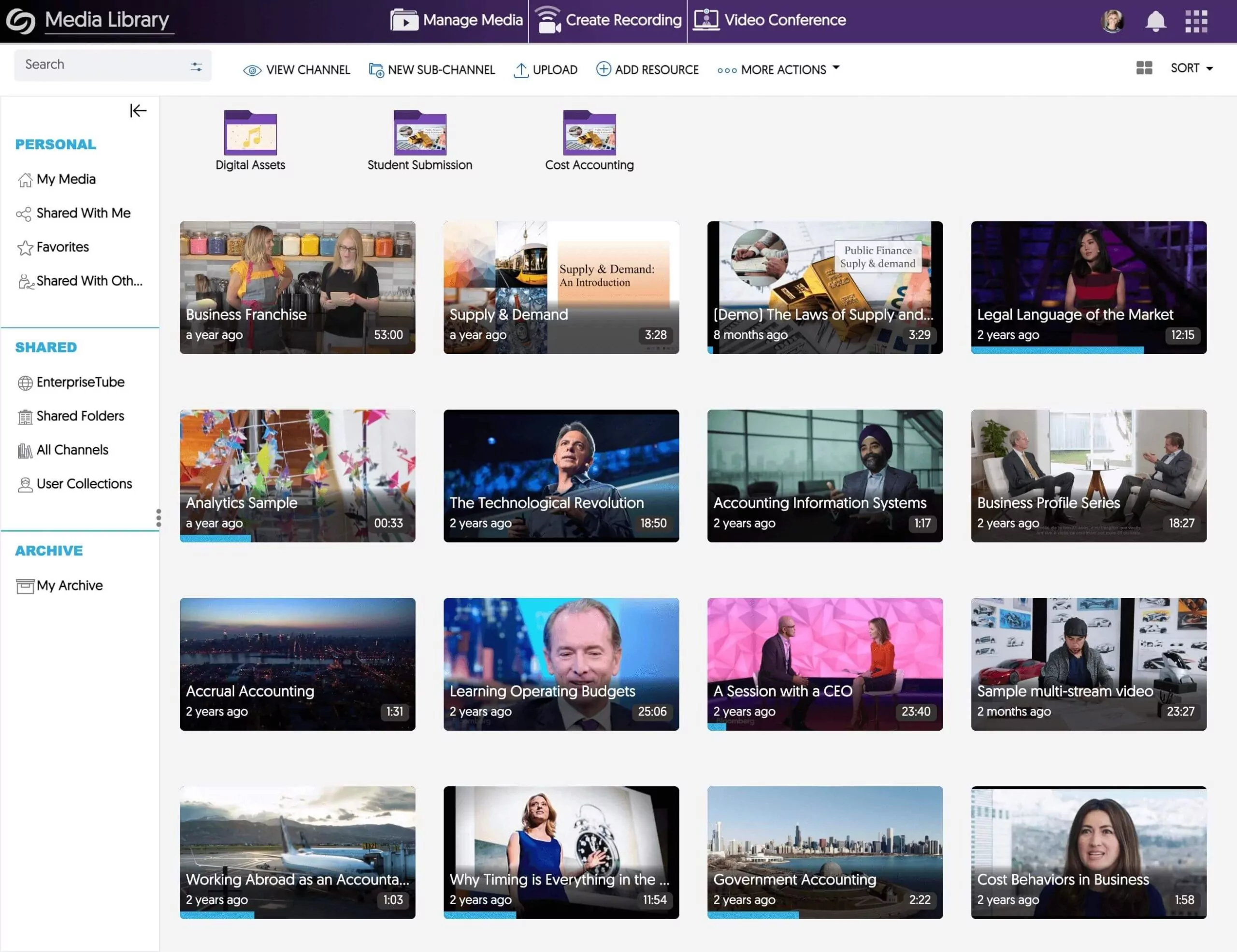
Muvi is a video streaming platform designed for delivering live and on-demand educational content across multiple devices. It combines video hosting, live streaming, and content management with tools for engagement, assessment, and secure distribution.
Key features include:
- Live streaming and webinars: Supports real-time classes, meetings, and events with interactive chat and Q&A.
- Centralized content library: Manages video archives and course materials in one system.
- Multi-device access: Delivers content across web, mobile, and TV applications.
- Assessment and tracking: Includes quizzes, assignments, and progress tracking.
- Content security and access control: Provides DRM, geo-restrictions, and user-based permissions.
- Recording and playback: Captures live sessions for later viewing.
- Scalability and global delivery: Supports audiences ranging from small groups to large-scale deployments.
7.Deel

Deel includes a built-in learning management component within its broader talent platform, aiming to help organizations create, assign, and track training programs. It focuses on automation and AI-assisted course creation, making it suitable for onboarding, compliance, and ongoing employee development in distributed teams.
Key features include:
- AI-powered course creation: Uses AI and drag-and-drop tools to build courses with quizzes, tasks, and multimedia content.
- Automated course assignment: Assigns training based on role, department, or start date with predefined rules.
- Centralized learning library: Combines internal courses with external content from integrated providers.
- Microlearning support: Enables short-form, modular training formats alongside traditional courses.
- Progress tracking and compliance: Monitors completion and ensures required training is delivered on time.
- Integrated talent management: Connects learning with goals, performance tracking, and broader HR workflows.

Source: Deel

8. Absorb LMS

Absorb LMS is a cloud-based learning platform that supports enterprise training across employees, customers, and partners. It combines user-focused design with AI-driven features, analytics, and integration capabilities to manage large-scale learning programs.
Key features include:
- Unified learning platform: Supports multiple audiences within a single system.
- Personalized learning paths: Uses AI and learner data to tailor training experiences.
- Gamification and social learning: Encourages engagement through interactive and collaborative features.
- AI-powered assistance: Provides coaching, search, and administrative support using AI tools.
- Advanced analytics: Tracks learner progress and training effectiveness with built-in reporting.
- Integration capabilities: Connects with enterprise systems to centralize learning data.

Source: Absorb LMS
9. Kallidus Learn

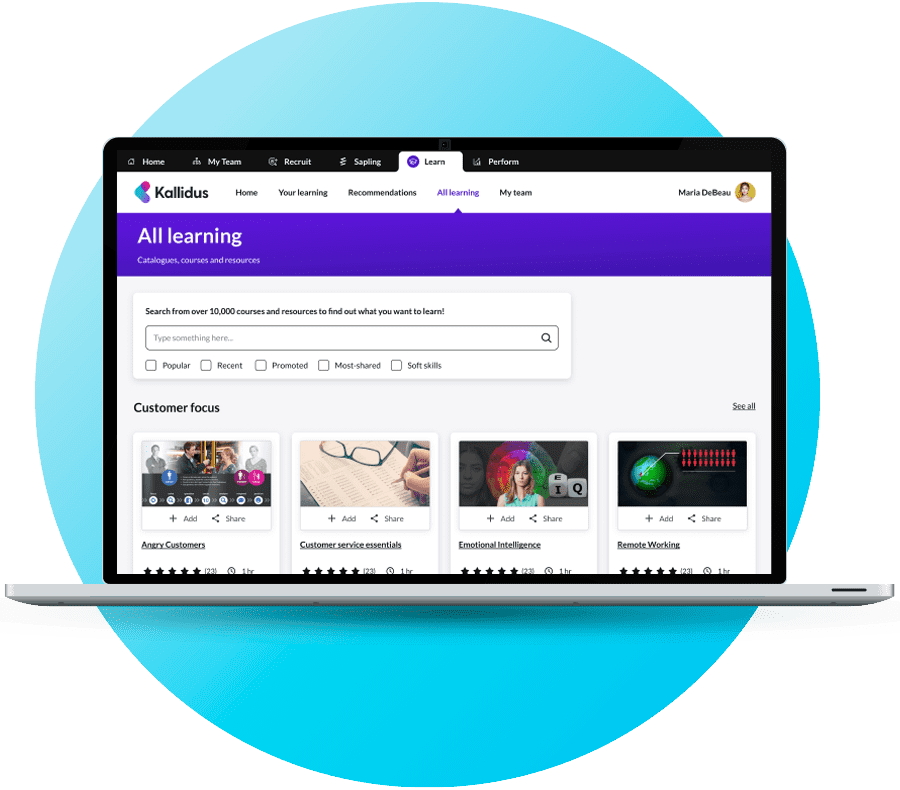
Kallidus Learn is an LMS focused on simplifying compliance training and employee development while providing strong reporting and automation. It emphasizes ease of use for both learners and administrators, with tools to align training with business goals and skills development.
Key features include:
- Automated training assignment: Delivers relevant courses based on user roles and data points.
- Compliance tracking: Provides visibility into completion rates and compliance gaps in real time.
- Embedded analytics: Uses integrated reporting tools to monitor performance and audit readiness.
- Manager enablement tools: Allows managers to assign training and track team development.
- Content and course management: Supports multiple content formats including SCORM, video, and documents.
- Integration and APIs: Connects with HR systems, SSO, and content libraries.
- Continuous professional development tracking: Tracks certifications and ongoing learning activities.
Source: Kallidus
10. SkyPrep

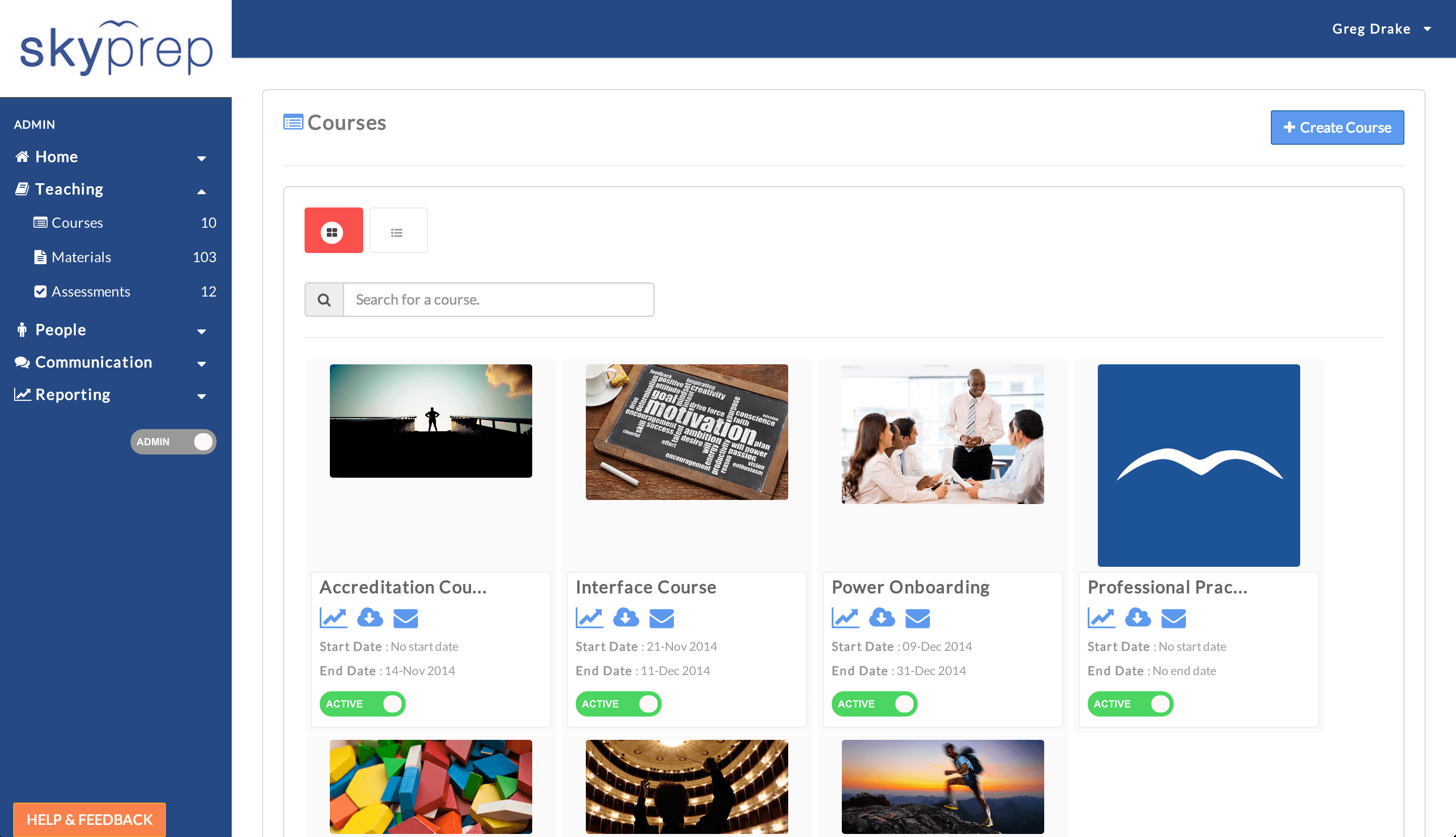
SkyPrep is a cloud-based LMS used to simplify course creation, delivery, and tracking while maintaining a focus on usability and automation. It supports employee, customer, and partner training with built-in tools for engagement, reporting, and integrations.
Key features include:
- Course creation tools: Builds training with assessments, checklists, and knowledge checks.
- Gamification features: Increases engagement through interactive learning elements.
- User management automation: Reduces manual work with automated workflows and data handling.
- Reporting and analytics: Provides insights into training performance and learner progress.
- Platform customization: Allows branding of the LMS with logos, colors, and certificates.
- Multi-tenant architecture: Supports multiple audiences or business units within one system.
- Integration support: Connects with tools such as ADP, Zoom, and Google services.
- AI-powered enhancements: Uses AI to assist with content creation and learning experiences.

Source: SkyPrep
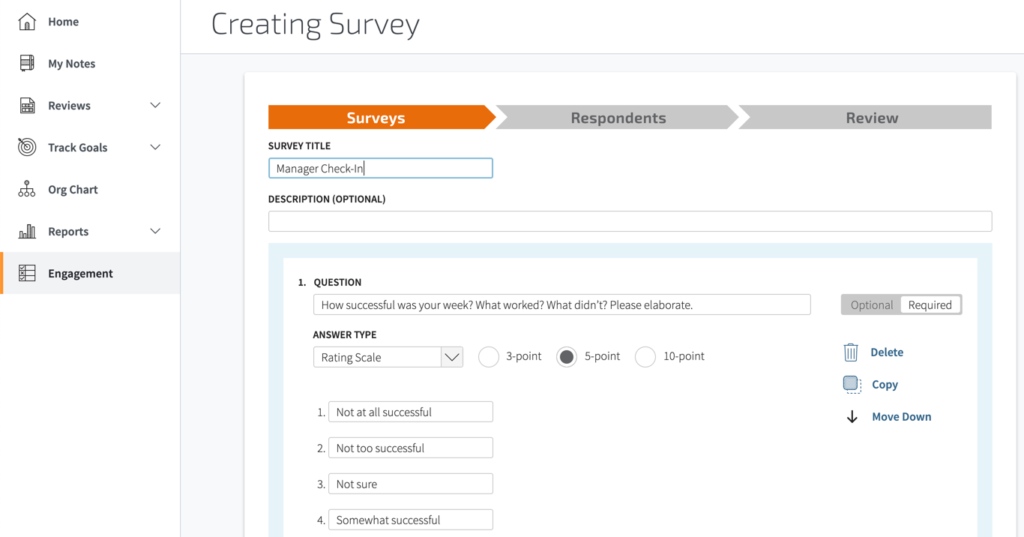
11. Mitratech Trakstar

Mitratech Trakstar is a talent management platform that includes learning and development as part of a broader employee lifecycle solution. It focuses on aligning training with performance management, goal setting, and continuous feedback to support workforce development.
Key features include:
- End-to-end talent management: Covers hiring, onboarding, training, performance, and succession planning.
- Performance and goal alignment: Enables organizations to set and track goals across teams.
- Continuous feedback tools: Supports ongoing coaching and employee development conversations.
- Automated workflows: Reduces manual processes in reviews, training, and talent management tasks.
- Analytics and reporting: Provides insights into employee performance and development trends.
- Integration with HR systems: Connects with existing tools for streamlined data management.
- Employee engagement features: Encourages participation through recognition and development tracking.

Source: Mitratech Trakstar
Was this post useful?
Thank you for your feedback!
