

Personalized Learning Platform: Key Features and 8 Solutions in 2025

What is a personalized learning platform?
A personalized learning platform tailors educational experiences to individual learners, adjusting content, pace, and feedback based on their unique needs and preferences. These platforms use technologies like AI and data analytics to create customized learning paths, improving engagement and knowledge retention. Key features include adaptive learning, microlearning, and tailored content delivery.
By monitoring learner performance and engagement, personalized learning platforms adjust the delivery and sequence of content, aiming to address unique strengths, weaknesses, preferences, and goals for every student. They are widely used in K-12 education, higher education, and corporate training environments.
Key aspects of personalized learning platforms include:
- Customized learning paths: These platforms create unique learning journeys for each individual, adapting to their strengths, weaknesses, and learning style.
- Adaptive learning algorithms: The platform dynamically adjusts the difficulty and content based on the learner’s performance, ensuring they are challenged appropriately.
- Data analytics and AI: These technologies are used to analyze learner data, identify areas for improvement, and personalize the learning experience.
- Microlearning: Content is broken down into small, digestible modules, allowing learners to focus on specific concepts and learn at their own pace.
- Engagement and motivation: Personalized learning can increase learner engagement by making the learning experience more relevant and enjoyable.
- Tailored content: Platforms can deliver content in various formats, including videos, interactive exercises, and simulations, to cater to different learning preferences.
- Feedback and support: Personalized learning platforms often provide timely feedback and support to help learners stay on track and address any challenges.
This is part of a series of articles about learning management system
Key aspects and features of personalized learning platforms
Personalized learning paths
Personalized learning paths provide a tailored journey through curriculum or training materials for each learner. By taking into account individual goals, prior knowledge, and learning preferences, these paths sequence lessons and activities in a way that maximizes relevance and engagement. This is a significant shift from linear, one-size-fits-all models, allowing learners to progress at their own pace and revisit topics when necessary.
The strategic design of learning paths benefits both students and educators. Learners gain agency and control over their progress, which can lead to higher motivation and improved outcomes. Instructors, meanwhile, can use the platform’s data to identify milestones, intervene at the right time, and better support diverse learner needs.
Adaptive learning algorithms
Adaptive learning algorithms are at the core of most personalized learning platforms. These algorithms analyze data—including student responses, time spent on topics, and assessment performance—to determine what content or activity should come next for a particular learner. By evaluating strengths and weaknesses in real time, adaptive algorithms adjust both the frequency and difficulty of learning materials, ensuring that learners are neither overwhelmed nor under-challenged.
The use of adaptive algorithms streamlines the instructional process, dedicating resources to areas needing the most attention. This enables a more efficient learning path, directly targeting ongoing knowledge gaps. For educators, adaptive systems provide valuable insights and reduce the manual effort needed to create differentiated instruction at scale.
Learning analytics dashboards
Learning analytics dashboards aggregate and present data on student performance, engagement, and progress across various activities. These dashboards offer visual insights at both the macro and micro levels, helping instructors quickly identify trends, outliers, and at-risk learners. Color-coded charts, graphs, and completion rates make it easier for educators and administrators to make data-informed decisions.
Learners benefit from these dashboards, too, gaining access to their own progress reports, strengths, and areas needing improvement. This transparency encourages reflection, goal-setting, and proactive self-regulation. For educational institutions and organizations, analytics dashboards provide evidence for curriculum improvements and strategic planning.
AI-powered content recommendations
AI-powered content recommendation systems analyze learner behavior, goals, past performance, and preferences to suggest relevant resources or learning activities. These systems function similarly to recommendation algorithms in streaming services but are tailored for education or training contexts. They help ensure that learners are guided toward the most useful materials, reducing the time spent searching and increasing the time engaged in meaningful work.
For instructors and administrators, AI-driven recommendations enhance the scalability of differentiated instruction. By automating resource selection, these systems free up human educators to focus on higher-level instructional design and interventions. In environments with large numbers of learners, such recommendations are essential for maintaining personalization at scale.
Microlearning and engagement
Microlearning breaks content into small, focused learning units—often just a few minutes long—that target specific skills or knowledge areas. This format aligns well with cognitive science principles, allowing learners to absorb information without cognitive overload. Personalized platforms use microlearning to deliver just-in-time content, often triggered by learner performance data or specific goals. It also enables flexible, on-demand learning.
To maintain engagement, personalized learning platforms incorporate interactive elements such as gamification, quizzes, and scenario-based simulations. These features foster active participation and provide instant feedback, which reinforces learning. By delivering content in short, dynamic formats and using engagement tactics grounded in learner behavior, these platforms sustain motivation and drive consistent progress.
Content customization and authoring tools
Content customization and authoring tools allow educators and instructional designers to create, modify, and organize digital learning resources directly within the platform. These tools typically support a range of media types—including video, interactive quizzes, and simulations—giving creators flexibility to match content to specific learner needs. Modular design capabilities make it easy to update materials and incorporate learner feedback.
Custom authoring reduces reliance on off-the-shelf materials, allowing instructors to address unique curricular goals or organizational training requirements. It also facilitates rapid iteration based on analytics and assessment results, ensuring content evolves as learner needs change. This adaptability is essential in both academic and professional development settings.
Feedback and assessments
Real-time feedback is a critical feature in personalized learning platforms. Immediate responses—such as hints, explanations, or corrective action—allow learners to understand their mistakes, reinforce correct solutions, and adjust their strategies without delay. Continuous, formative assessments are built into learning modules, making it easy to monitor understanding as learners progress through the material.
These feedback mechanisms also enable instructors to spot issues quickly and adapt their teaching. Automated assessments save time while providing detailed analytics, which can be used to personalize instruction further. This real-time loop accelerates the learning process and ensures learners receive the right support exactly when they need it.
Notable personalized learning platforms
1. Kaltura

Kaltura Virtual Classroom provides an all-in-one learning hub for creating engaging, branded educational experiences that engage, upskill, and empower. The platform also offers Class Genie, an AI-driven personalization tool that creates tailored learning journeys by drawing exclusively from an institution’s verified internal knowledge base. It helps students navigate vast content libraries and provides them with hyper-personalized content experiences.
Key features:
- AI-driven personalized learning: The platform uses Class Genie to create tailored learning journeys by drawing exclusively from an institution’s verified internal knowledge base, ensuring complete reliability and preventing AI hallucinations.
- Hyper-personalized content intelligence: It tailors content experiences—from video snippets to interactive flashcards and quizzes—based on student engagement patterns and previous interactions.
- Continuous learning environment: Create a persistent classroom experience with a one-time setup, pre-uploaded branded materials, and a collaborative whiteboard that saves content.
- Engaging learning experiences: Keep participants focused with a powerful suite of engagement tools, including group and 1:1 chats, Q&A, polls, quizzes, and breakout rooms.
- On-demand content: Easily record sessions for on-demand viewing in a media library, with auto-published, captioned recordings for accessibility.
- Actionable insights: Drive success with advanced analytics and reporting tools that track attendance, measure engagement, and provide real-time feedback for adaptive learning strategies.
- Comprehensive management: Use moderation tools to effortlessly share videos, use a built-in teleprompter, control participants, and track focus rates.
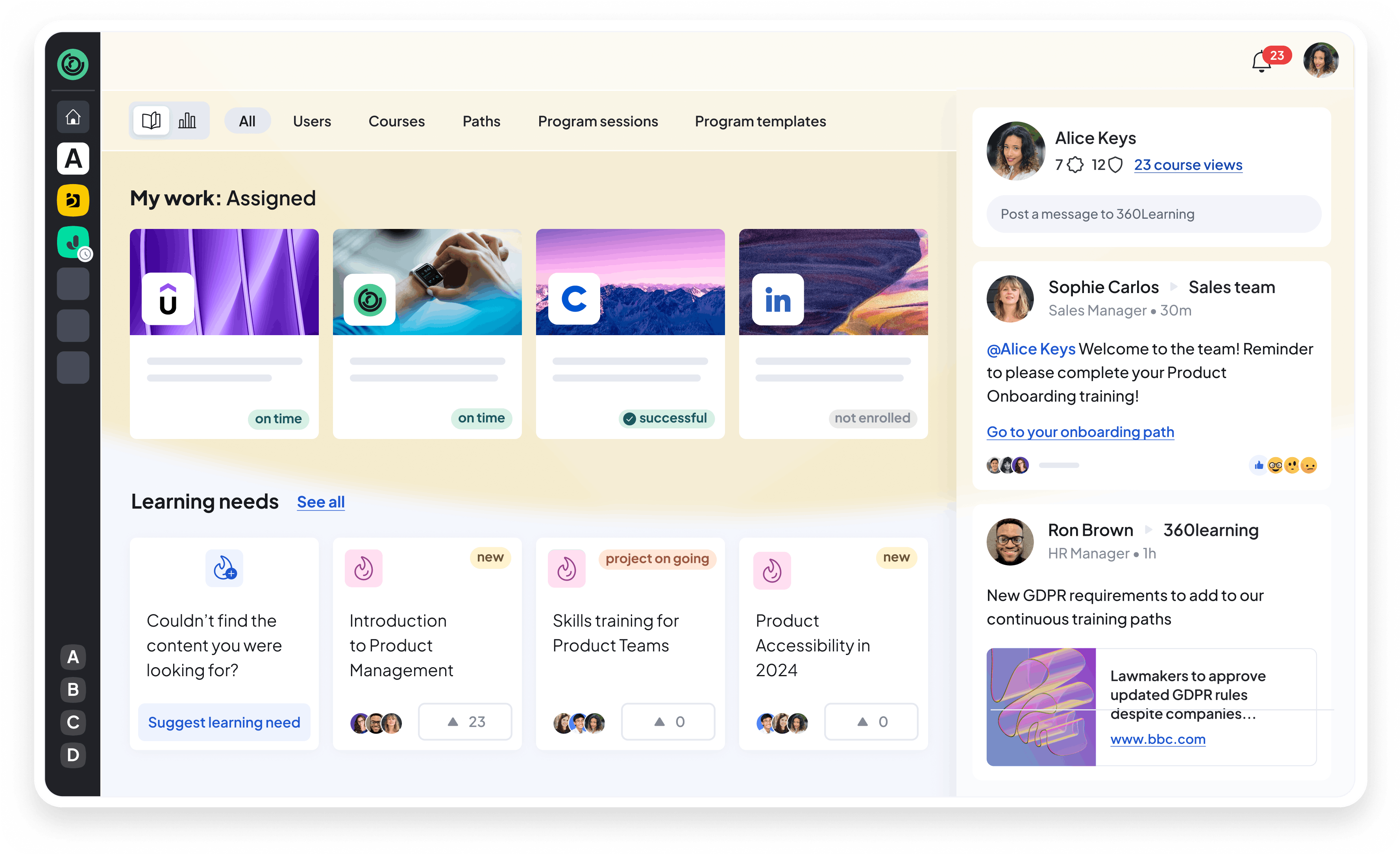
2. 360Learning

360Learning is a collaborative learning platform that blends AI-powered automation with human expertise to simplify training creation and delivery. Intended for corporate learning and development (L&D) teams, it enables organizations to decentralize content creation by involving internal subject-matter experts, with admin-controlled templates and workflows.
Key features include:
- Course creation: Enables quick generation of course shells, quizzes, and content tagging with AI assistance.
- Collaborative authoring: Multiple contributors can co-create content, exchange feedback, and update courses post-launch in a shared space.
- Customizable AI prompts: Admins can define prompts and templates to ensure content aligns with company standards.
- Integrated user management: Automates provisioning, permissions, and group assignments, with support for SSO and syncing with HR systems.
- Automated enrollment and compliance tracking: Assigns training based on rules such as job role or certificate expiration, and handles re-enrollment automatically.

Source: 360Learning
3. Absorb LMS

Absorb LMS is a cloud-based learning management system to deliver, manage, and optimize training across internal and external audiences—including employees, customers, partners, and members. It supports learning needs such as onboarding, compliance, upskilling, and eCommerce training.
Key features include:
- AI-driven personalization: Uses AI to create individualized learning paths, identify skill gaps, and match content to learners’ goals and role.
- Administration: Automates assignments, compliance tracking, certificate renewal, and reporting.
- Fast onboarding: Supports structured, role-based onboarding for internal and external users with workflows.
- Compliance management: Delivers training with automated reminders, tracking, and reporting tools.
- Course creation tools: Offers course authoring, including AI-generated content, quizzes, and templates.

Source: Absorb LMS
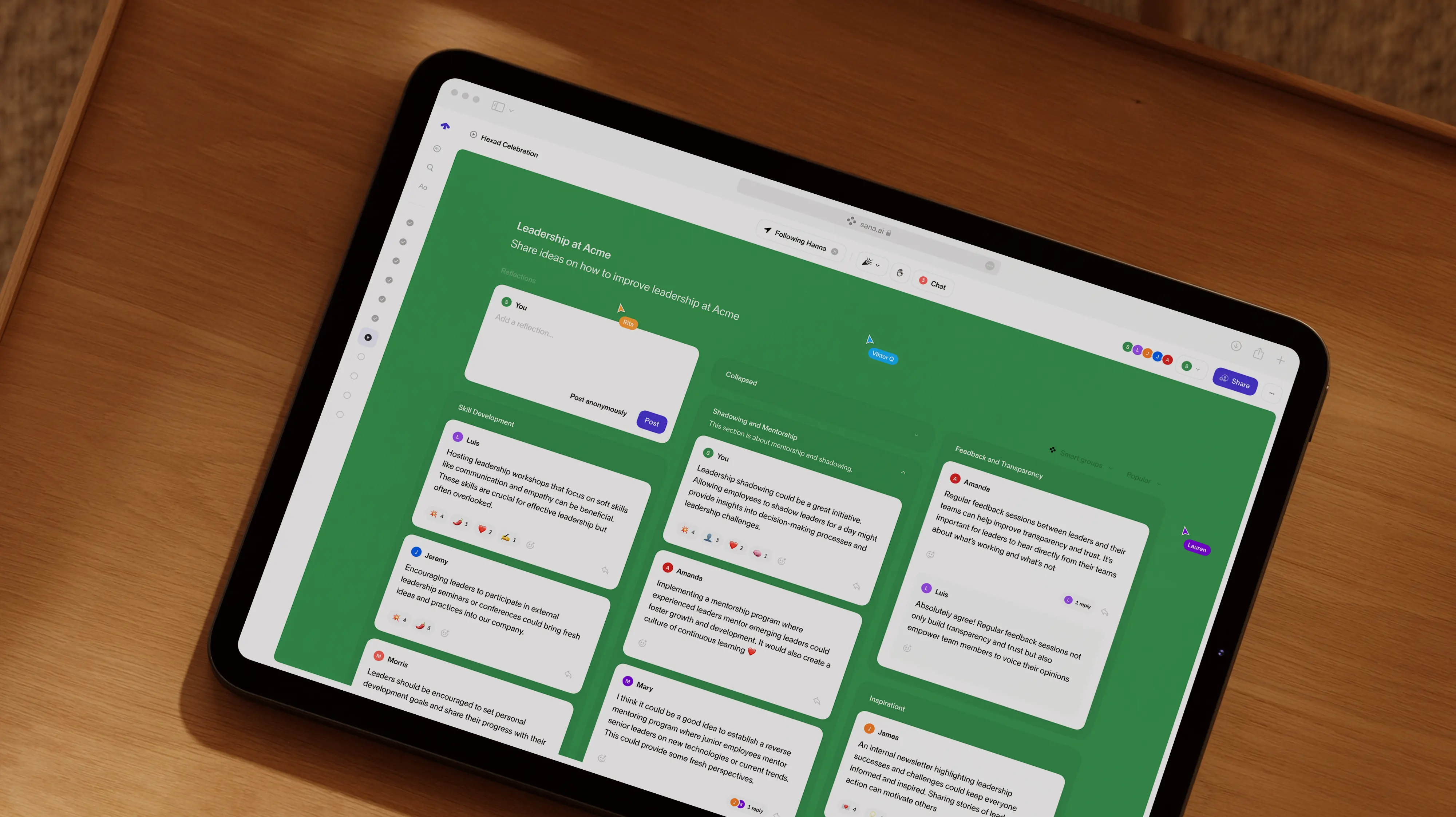
4. Sana Labs

Sana Learn is an AI-native learning platform that unifies the functions of an LMS, LXP, authoring tool, and virtual classroom. It automates enrollment, content creation, analytics, and learner support to minimize administrative effort.
Key features include:
- Personalization: Delivers learning paths and just-in-time answers based on individual behavior and performance.
- Automated learning management: Enrollments, scheduling, and updates are managed automatically through configurable AI rules.
- Collaborative authoring tools: Teams can co-create interactive content with AI-assisted course generation from PDFs and source material.
- Integrated virtual classroom: Enables live and blended learning experiences within the same platform.
- Just-in-time learning: Learners can ask questions in natural language and receive source-cited answers from organizational knowledge and course materials.

Source: Sana Labs
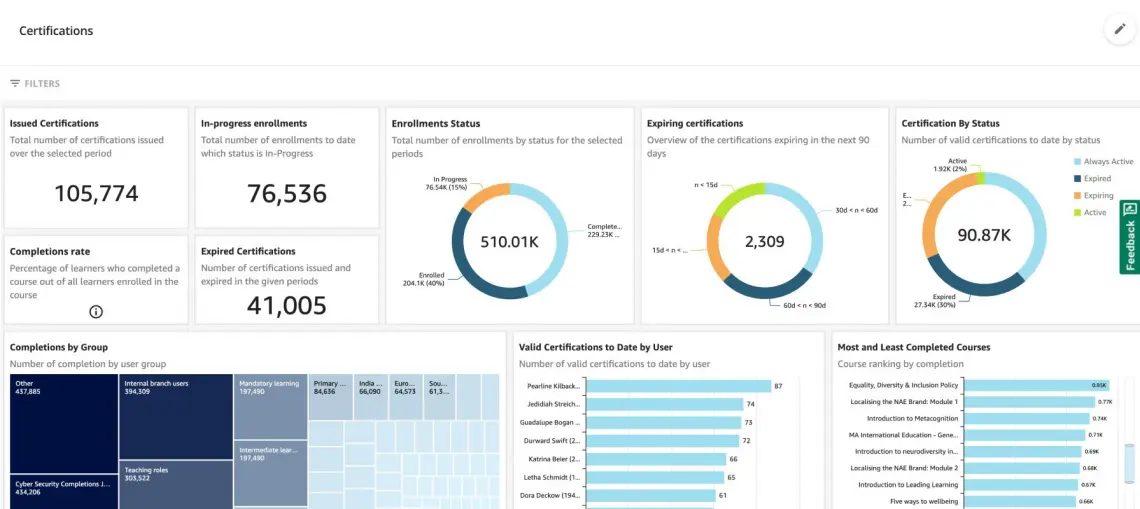
5. Cornerstone

Cornerstone LMS is a learning management system to deliver, manage, and track training across the workforce, including employees, partners, and customers. As part of the broader Cornerstone Talent Experience Platform, it unifies learning, compliance, skills development, and performance. It supports personalized learning paths, analytics, and regulatory compliance.
Key features include:
- Personalized learning paths: Tailors content to individuals, roles, or departments.
- AI-driven recommendations: AI analyzes learner behavior and skill gaps to automatically recommend relevant content.
- Centralized content management: Manages learning content (documents, videos, courses, and assessments) in one platform.
- Compliance automation: Helps track certifications, automate renewals, and ensure audit readiness.
- Analytics & reporting: Offers visibility into learner progress, training effectiveness, and organizational skill development.

Source: Cornerstone
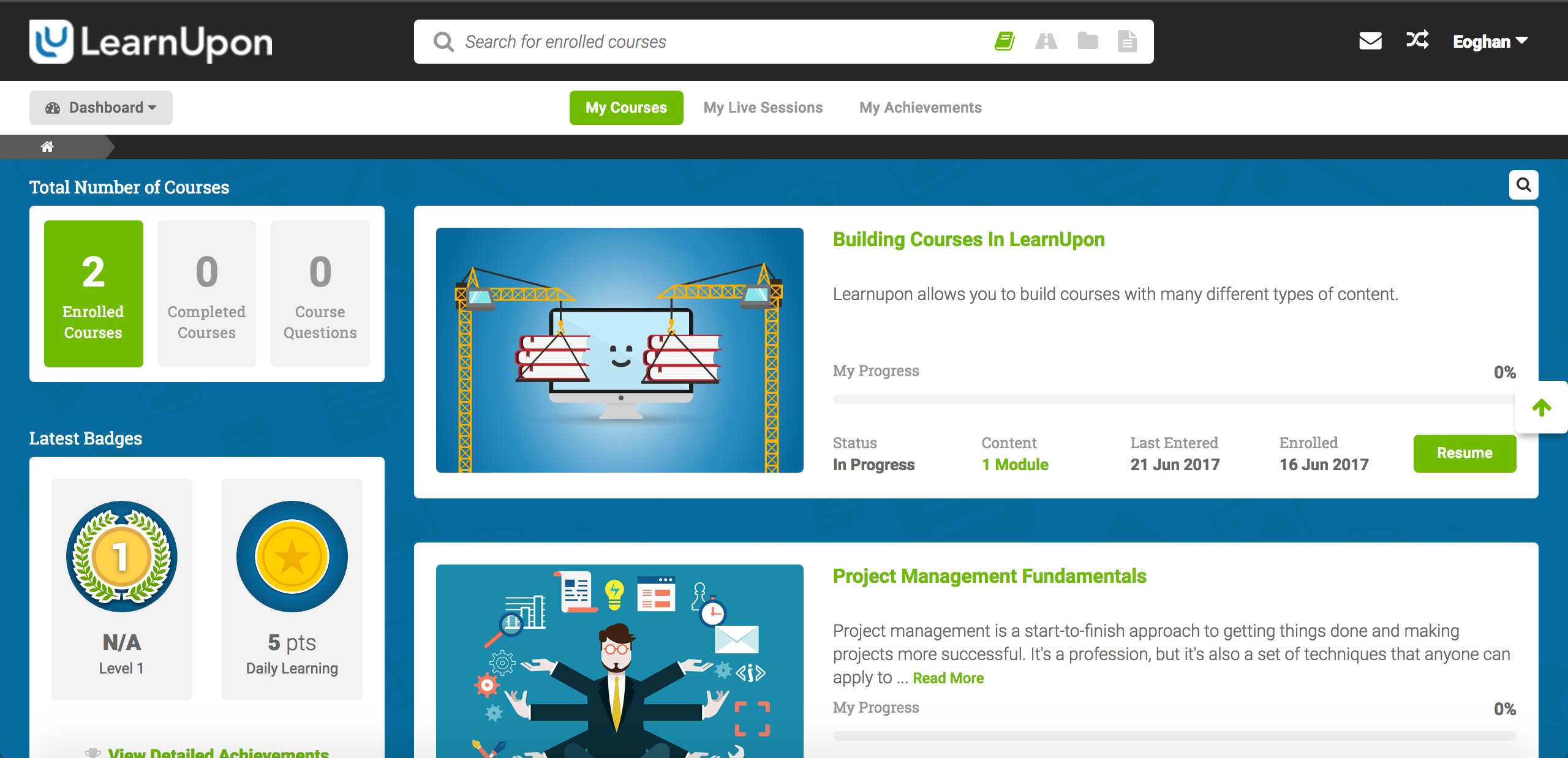
6. LearnUpon

LearnUpon LMS is a cloud-based learning management system to simplify, scale, and centralize training across an organization. It is useful for training employees, customers, or partners, and helps deliver learning experiences.
Key features include:
- Fast implementation: Can launch training in a week with onboarding support and a setup process that adapts to the timeline.
- Simple interface: Designed for both administrators and learners.
- Course authoring: Helps build and manage training content without technical expertise.
- Automated workflows: Eliminates repetitive tasks with automated enrollments, notifications, and data syncs.
- Multi-audience portals: Creates dedicated, customizable training environments for different user groups, such as teams, departments, or external audiences.

Source: LearnUpon
7. Docebo

Docebo is an AI-powered learning platform to deliver personalized training experiences to employees, partners, customers, and members. It enables organizations to centralize learning, simplify administration, and build programs that drive business growth.
Key features include:
- AI-powered automation: Automates repetitive tasks like enrollments, notifications, tagging, and recertifications.
- Personalized learning experiences: Creates customized learning pages and user journeys for different audiences.
- Content creation with AI: Can generate, scale, and localize training content using generative AI.
- Skills and talent development: Helps assess skills, track growth, and close gaps with functionality for skill mapping and access to a catalog of expert-led courses.
- Social learning and gamification: Improves learner engagement through discussion forums, user-generated content, knowledge sharing, and gamified achievements.

Source: Docebo
8. Squirrel Ai

Squirrel Ai is an adaptive learning system that delivers personalized tutoring experiences for students of various levels. It continuously adjusts content to match each student’s knowledge gaps and strengths. It is available in over 3,000 centers worldwide with at-home and in-center learning.
Key features include:
- Adaptive AI tutoring engine: Learns from student behavior and performance to adjust lesson difficulty, pacing, and sequencing.
- Closed-loop learning system: Integrates assessment, instruction, practice, testing, and tutoring into a continuous feedback cycle.
- Learning tablets: Custom tablets deliver interactive, adaptive lessons at home or in learning centers.
- Nano-level learning objectives: Covers over 10,000 concepts to target and fill knowledge gaps.
- Micro lessons: Features expert-created instructional content tailored to a student’s learning path and readiness level.
Factors to consider while choosing a personalized learning platform
Selecting the right personalized learning platform requires a close alignment with organizational goals, user needs, and existing systems. Here are key factors to evaluate:
- Learning objectives alignment: Ensure the platform supports your educational or training goals—whether it’s improving learner retention, delivering compliance training, or enabling self-paced skill development.
- Scalability: Assess if the platform can scale with your organization’s growth, handling increasing numbers of users, content, and integrations without performance degradation.
- AI and adaptivity capabilities: Examine the depth of AI integration—look for real-time personalization, intelligent content recommendations, and adaptive assessments that align with learner progress.
- Content creation and flexibility: Choose platforms with robust authoring tools and support for multimedia. The ability to customize and update content is crucial for maintaining relevance and engagement.
- Analytics and reporting: Look for detailed, real-time dashboards that track learner progress, content performance, and organizational impact. Customizable reports are a plus for compliance and strategic planning.
- Integration with existing systems: Ensure seamless integration with HR systems, SSO, CRM, and other enterprise tools to avoid data silos and manual workarounds.
- User experience: Evaluate the interface from both the learner and admin perspectives. Intuitive navigation, mobile accessibility, and localization features significantly enhance adoption.
- Support and training: Consider the quality of customer support, onboarding resources, and training provided. Platforms with strong support structures reduce downtime and speed up implementation.
- Security and compliance: Verify that the platform complies with relevant data protection regulations (e.g., GDPR, FERPA) and offers robust access controls and encryption.
- Cost and ROI: Balance licensing fees, implementation costs, and maintenance with the platform’s potential to improve learning outcomes and operational efficiency.
Conclusion
Personalized learning platforms are transforming how education and training are delivered by adapting to each learner’s pace, preferences, and progress. Their intelligent use of data and automation improves learning outcomes, simplifies instruction, and supports more equitable and engaging educational experiences at scale.
Was this post useful?
Thank you for your feedback!