

Best agentic AI solutions: 9 tools to know in 2026

Agentic AI represents a shift from reactive, task-specific systems to proactive, goal-directed ones. Unlike traditional automation, agentic AI can initiate tasks, adapt to changing conditions, and collaborate with other agents or users, all without requiring explicit step-by-step instructions.
What is agentic AI?
Agentic AI solutions are autonomous systems that can take proactive, multi-step actions to achieve goals, moving beyond simple task completion to independently identify problems, plan, and execute workflows. They achieve this by collecting and reasoning over data, and integrating with tools and other agents to complete complex tasks like optimizing supply chains, managing customer service issues, or automating enterprise processes.
How agentic AI solutions work:
- Perception: Agents gather information from their environment through APIs, user interactions, and other data sources.
- Reasoning: They use capabilities like natural language processing and computer vision to interpret data, identify patterns, and understand the context of a situation.
- Planning and action: Based on reasoning, agents can plan and execute a series of actions to complete a task, often using multiple tools and coordinating with other agents.
- Retrieval augmented generation (RAG): Many solutions use RAG to combine their internal knowledge with real-time data for more accurate and up-to-date outputs.
- Multi-agent frameworks: Modern agentic solutions often use frameworks that allow multiple agents to collaborate and delegate tasks to each other.
How agentic AI solutions work
Perception
Perception is the foundational layer of agentic AI, responsible for capturing and interpreting data from the environment. This process involves using sensors, APIs, or streaming data sources to sense states and changes, such as user inputs, system events, or environmental signals like emails, documents, or audio. The AI’s perception capabilities use computer vision, natural language processing (NLP), or other analytical models to extract actionable insights.
Once the perception layer ingests and processes data, it translates observations into structured representations that downstream components can act upon. For example, an email sentiment classifier could pass along an escalated customer issue, or a visual inspection tool might flag a defect in a manufacturing line. This ability to turn raw, unstructured data into machine-usable information underpins the awareness and responsiveness that agentic AI systems require.
Reasoning
Reasoning involves evaluating information the system has perceived and applying logic or learned heuristics to draw inferences. In agentic AI, reasoning includes probabilistic logic, multi-modal fusion, and adapting strategies based on a combination of real-time inputs and historical context. Reasoning modules connect perception to action by determining intent, prioritizing objectives, or resolving conflicts between competing goals.
The sophistication of agentic AI reasoning is evident in how agents solve ambiguous or novel problems. Instead of just matching predefined responses, these systems may conduct searches, compare outcomes, or synthesize new responses using large language models or planning algorithms.
Planning and action
Planning and action are at the core of agentic AI’s ability to execute goals. During the planning phase, the system breaks down high-level objectives into a series of manageable tasks or action steps, sometimes using task decomposition algorithms like hierarchical planning or Monte Carlo tree search. The AI then sequences these actions, assembles necessary resources, and manages dependencies to maximize the probability of goal completion.
Executing planned actions requires interfacing with digital systems or physical devices using APIs, robotic actuators, or workflow orchestration tools. Agentic AI systems can monitor their actions in real-time, detect deviations, and adjust the plan to handle unexpected events. This closed-loop approach ensures the agent can operate adaptively and reliably, even in unpredictable or multi-agent environments.
Retrieval augmented generation (RAG)
Retrieval augmented generation (RAG) enhances an agentic AI’s capacity to deliver contextually relevant and accurate outputs by supplementing generative models with an external retrieval step. In RAG setups, the AI system first searches a relevant corpus, database, or knowledge base for supporting documents or facts. Then, it uses these retrieved materials to guide or condition the output of a generative model, such as a large language model.
This mechanism mitigates factual errors and hallucination risks inherent in pure generative systems, producing answers grounded in up-to-date or domain-specific knowledge. For agentic AI, RAG is especially vital in scenarios requiring transparency, traceability, or dynamic expertise, such as technical support agents, compliance analysis, or legal research applications.
Multi-agent frameworks
Multi-agent frameworks enable multiple AI agents to collaborate and coordinate toward shared or distributed objectives. Each agent may possess specialized capabilities, some focused on perception, others on planning or execution, but they communicate and synchronize actions via shared protocols or orchestrators.
This architecture allows agentic AI systems to tackle problems that exceed the cognitive or operational limits of single agents, such as large-scale simulations, distributed troubleshooting, or business process coordination. The benefits of multi-agent arrangements include parallelism, robustness, and flexibility. Agents can divide and conquer large tasks or back each other up in error recovery, ensuring the system remains resilient under failure conditions.
Types of agentic AI solutions
Agentic AI spans a wide variety of domains, with different categories of solutions designed to automate and optimize specific types of workflows. These systems vary in scope and technical complexity, from lightweight, single-agent assistants to sophisticated, multi-agent platforms coordinating across entire enterprises. Prominent categories include:
- Video and media lifecycle automation: These solutions manage content across creation, curation, editing, publishing, and analysis. Agentic systems in this category often automate media tagging, video summarization, and distribution across platforms.
- Customer service and support automation: Agents in this category handle inbound support tickets, generate responses, escalate complex issues, and integrate with CRM tools to deliver personalized customer experiences.
- Workflow automation and process orchestration: These tools use agentic systems to manage end-to-end processes, coordinate across multiple systems, and maintain compliance and performance at scale.
- Data analysis and business intelligence: AI agents here extract insights from structured and unstructured data, generate visualizations, and provide decision support by autonomously running reports or forecasting trends.
- Software development assistance: Agentic development tools help with coding, debugging, documentation, and CI/CD orchestration. They may also automate infrastructure provisioning and testing.
- Sales and marketing automation: Agents support lead qualification, email campaigns, social media posting, and content personalization based on user behavior and preferences.
- Enterprise IT operations: Agentic AI can perform incident detection, root cause analysis, patch management, and compliance checks without human intervention.
- Personal productivity tools: Lightweight agentic systems act as digital assistants, helping individuals schedule meetings, summarize documents, or manage inboxes through natural language commands.
Below we provide a set of tools from a few selected categories to illustrate how different agentic AI solutions are being applied in practice.
Related content: Read our guide to agentic AI tools (coming soon)
Notable agentic AI solutions
Video and media lifecycle automation
1. Kaltura

Kaltura is an end-to-end video experience cloud solution with powerful agentic AI features that can manage the full media lifecycle, from creation and enrichment through personalization, distribution, and analytics. It connects to multiple enterprise systems to ingest existing content and metadata, then uses AI agents to tag, summarize, route, and repurpose assets across internal and external channels.
Kaltura’s Work Genie–based capabilities turn enterprise video and knowledge content into a proactive assistant layer, delivering real-time, role-aware answers and learning experiences drawn only from trusted, permissioned sources. Instead of static video libraries, organizations get AI-orchestrated micro-learning, instant insights, and suggested next steps that adapt to each viewer’s engagement patterns and knowledge gaps.
Key features include:
- Knowledge-grounded video assistant: Work Genie taps into existing media, documents, and learning assets to provide concise, contextual responses, ensuring the AI “speaks only the organization’s truth” while respecting granular permissions.
- Hyper-personalized learning at scale: Users receive tailored learning paths, flashcard-style micro-lessons, and video snippets that adjust dynamically to their role, behavior, and performance, helping close knowledge gaps and keep teams aligned.
- Multi-source search and content discovery: An internal, multi-source AI search engine surfaces the most relevant video and knowledge objects instantly, cutting through content clutter and reducing time spent hunting for information.
- Real-time avatar experiences: Kaltura now offers real-time, customizable AI avatars that are grounded in the company’s knowledge base and can interact directly with users, enabling use cases such as 24/7 customer support, guided product walkthroughs, personalized marketing interactions, and sales enablement conversations.
- Enterprise security and governance: All agentic interactions run within an enterprise-grade security framework that enforces access controls, keeps intellectual property protected, and prevents AI hallucinations by relying only on verified internal content.
These capabilities position Kaltura as a comprehensive agentic AI solution for organizations looking to transform video and media from passive assets into interactive, autonomous experiences that support customers, employees, and partners across support, marketing, sales, and learning workflows.
2. Relevance AI

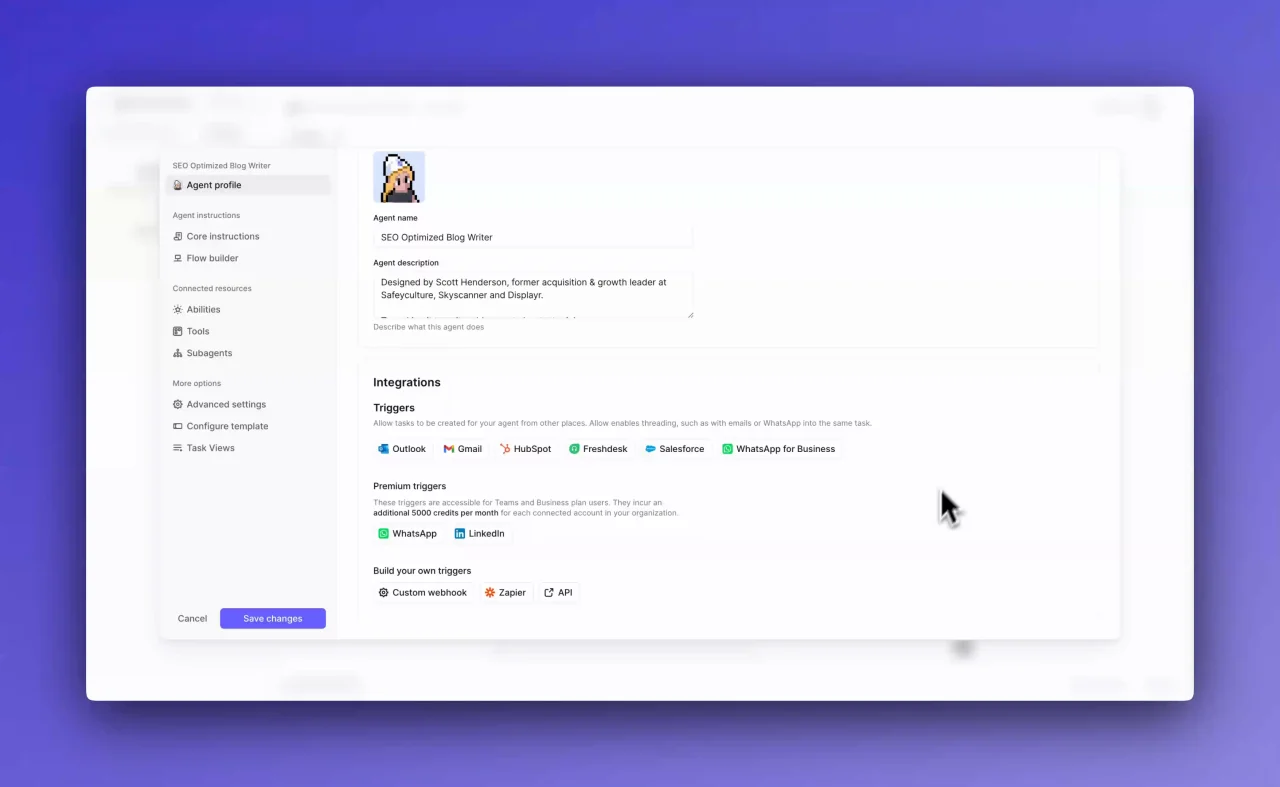
Relevance AI offers an agentic AI platform that allows users to create and deploy AI agents tailored to business tasks. These agents can be onboarded like team members, trained to follow company workflows, and equipped with tools to operate autonomously. Relevance AI emphasizes low-code setup, enabling users without technical backgrounds to configure agents for tasks such as customer communication, lead qualification, and inbox management.
Key features include:
- No coding required: Users can build, train, and deploy agents without writing code.
- Workflow integration: Connects with tools like Zapier and Snowflake to fit seamlessly into business operations.
- Process teaching: Allows users to define and teach custom processes that agents can follow autonomously.
- Prebuilt templates: Offers a library of tools and agent templates for quick setup.
- Custom skills: Agents can be equipped with AI tools for tasks like web search or video transcription.

Source: Relevance AI
3. OutSystems Agent Workbench

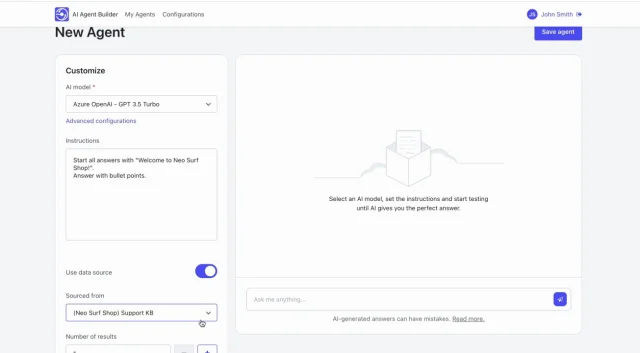
OutSystems Agent Workbench is a unified platform for building, deploying, and managing agentic AI solutions. It enables teams to create AI agents that automate workflows, improve user experiences, and drive revenue within a secure, low-code environment. It combines data integration, user management, and AI orchestration in one interface.
Key features include:
- End-to-end agent lifecycle: Build, test, deploy, and monitor AI agents from a single platform with embedded governance and security.
- Low-code development: Accelerate time to production using visual tools and prebuilt components.
- Enterprise-grade deployment: Use separate endpoints for dev, test, and production environments, with load balancing and secure scaling.
- Integrated tech stack: Connect agents with enterprise systems, data sources, and workflows through open APIs and native integrations.
- Customizable agents: Create agents that reason, plan, and use tools; customize behavior using trusted enterprise context and large language models.

Source: OutSystems
Customer service and support automation
4. Moveworks Agent Studio

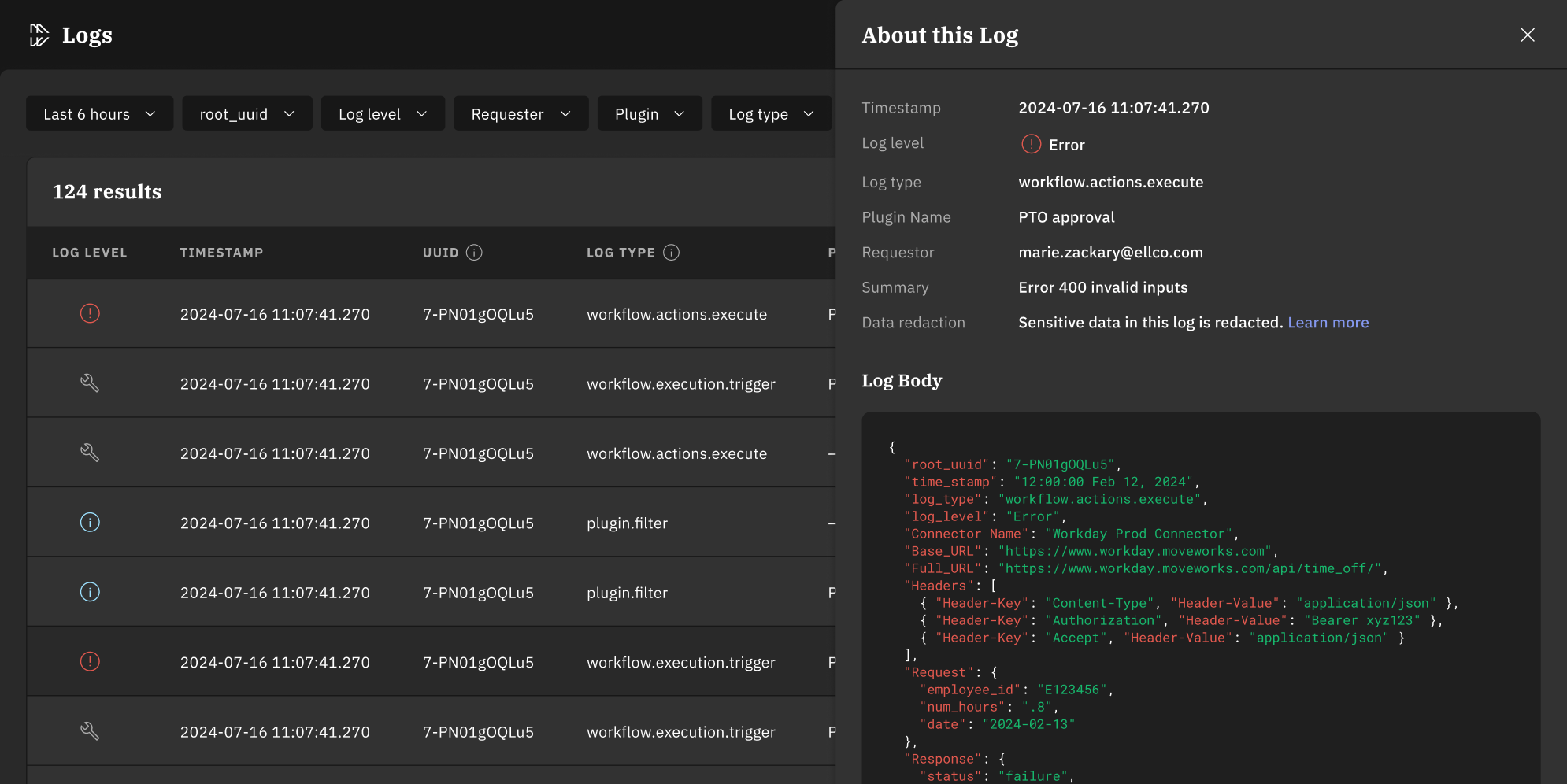
Moveworks Agent Studio is a platform to create, customize, and deploy AI agents that automate enterprise-wide workflows. It helps organizations to transform repetitive tasks across departments like IT, HR, Finance, and Sales into automated processes that save time and improve productivity.
Key features include:
- Cross-department automation: Build AI agents for teams across the organization to eliminate manual tasks and support high-impact work.
- System integration: Connect agents to existing systems like CRMs, ERPs, and HRIS through native API integrations for full end-to-end automation.
- AI agent marketplace: Access pre-built, installable AI agents to speed up deployment across use cases and business units.
- Low-code development workspace: Use a developer-oriented, guided editor to quickly create and customize AI agents without heavy coding.
- Agentic automation engine: Map natural language commands to backend systems using an engine that understands business logic and workflows.

Source: Moveworks
5. IBM Watson Orchestrate

IBM Watson Orchestrate is an open platform for building, deploying, and managing AI agents across business domains. Designed to unify disparate tools and systems, it enables organizations to orchestrate AI-driven workflows without vendor lock-in or system overhauls. It supports multi-agent collaboration, agent governance, and integration with existing enterprise applications.
Key features include:
- Multi-agent orchestration: Coordinate multiple AI agents across tasks and systems to enable end-to-end business automation.
- Drag-and-drop visual builder: Design agent workflows and logic with a simple interface, reducing development complexity.
- Prebuilt agent catalog: Access a library of ready-made agents and tools to speed up implementation across HR, sales, finance, and more.
- Open architecture: Integrates with existing workflows, data, and systems.
- Enterprise integration: Connects with a range of business applications to support complex, cross-functional processes.

Source: IBM
6. Microsoft Copilot Studio

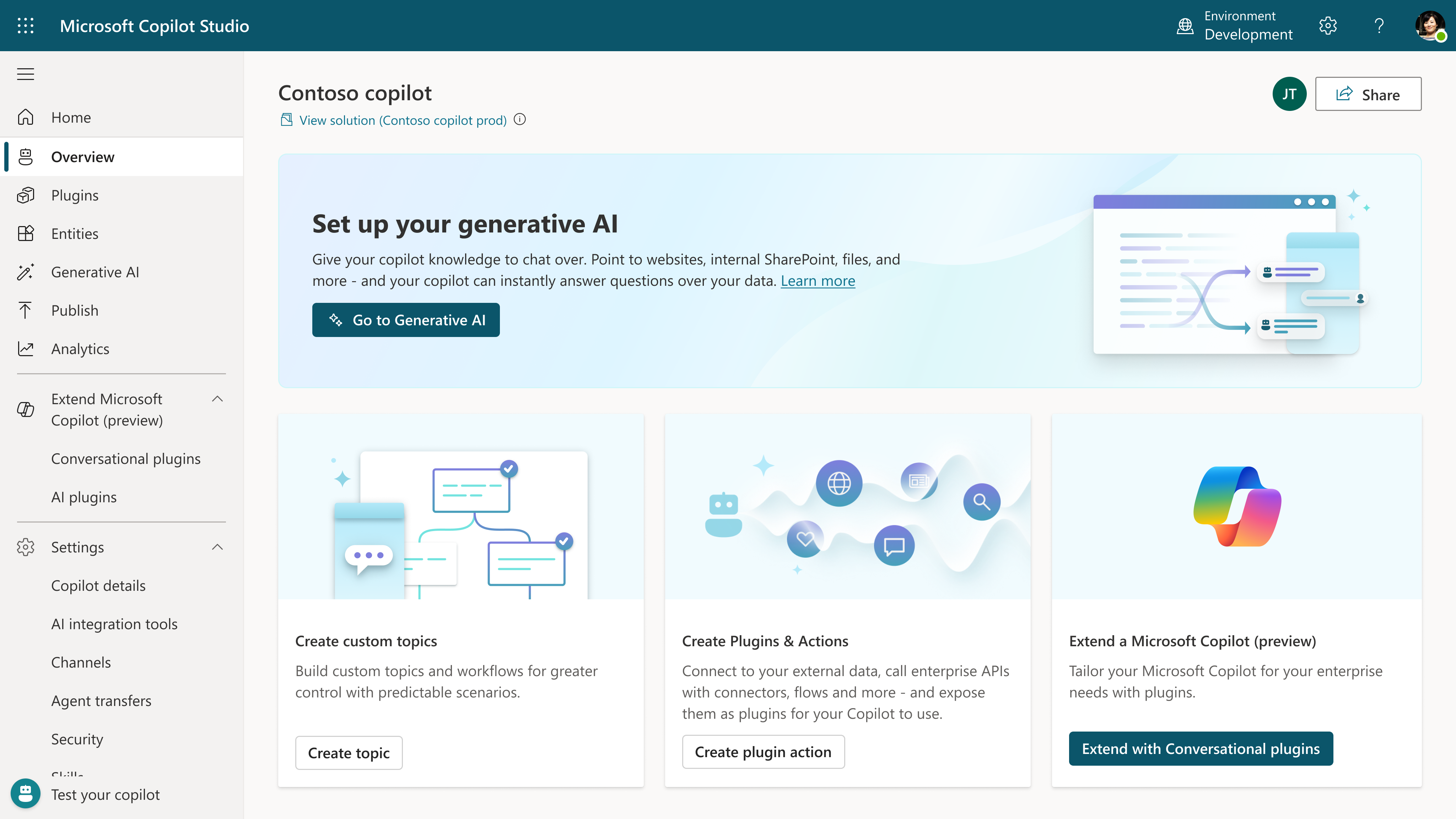
Microsoft Copilot Studio is a platform for creating, customizing, and deploying AI agents that integrate with business data and tools. Built for natural language interaction, Copilot Studio allows users to build agents without coding, enabling them to automate tasks, guide workflows, and enhance customer and employee experiences across multiple channels.
Key features include:
- Natural language agent creation: Build chat-based agents that understand and respond to user input using simple, conversational prompts.
- Business data integration: Connect agents to internal data sources, allowing them to perform tasks like answering questions, retrieving insights, or executing business processes.
- Custom agent design: Tailor behavior, logic, and responses to fit specific use cases in finance, HR, IT, customer service, and more.
- Multi-channel deployment: Publish agents across Microsoft 365 apps and external channels used by teams and customers.
- Multi-model support: Leverage large language models from providers like OpenAI and Anthropic for flexible, high-quality responses.

Source: Microsoft
Workflow automation and process orchestration
7. Creatio

Creatio is a no-code platform for building AI agents and enterprise applications using natural language and visual design tools. It allows technical and non-technical teams to accelerate digital transformation by automating workflows and assembling reusable components without writing code.
Key features include:
- Natural language agent creation: Build AI agents and applications using text-based prompts supported by design assistants.
- No-code visual designers: Create interfaces and workflows with drag-and-drop tools and prebuilt UI elements.
- Composable architecture: Assemble apps and agents from reusable components, or extend capabilities via the Creatio Marketplace.
- AI-assisted development: Use AI to simplify process design, enhance UI/UX, and generate business logic dynamically.
- Workflow automation: Manage both structured processes and adaptive case workflows with human-in-the-loop support.

Source: Creatio
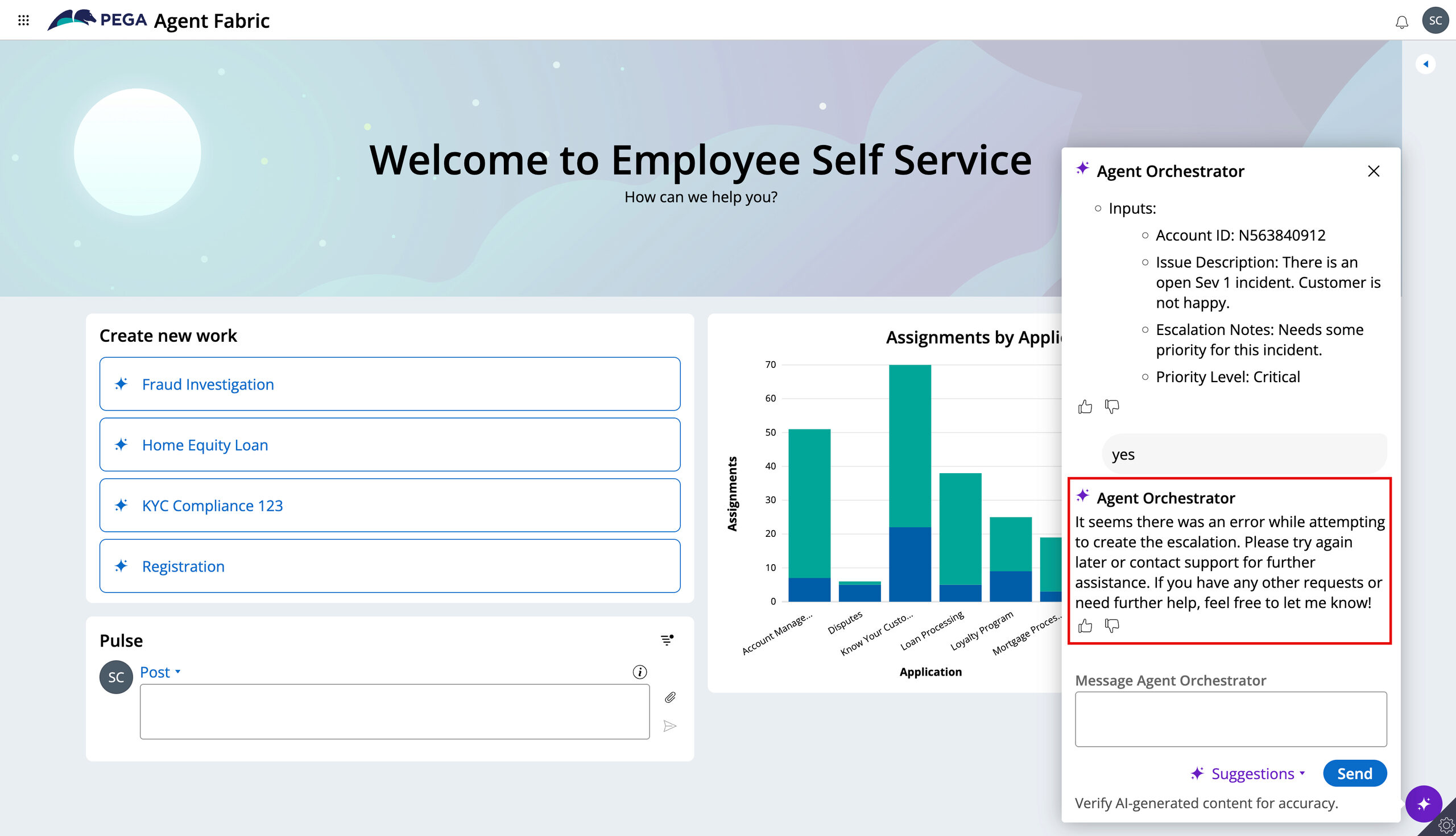
8. Pegasystems Agentic Process Fabric

Pega Agentic Process Fabric™ is an orchestration layer to unify AI agents, workflows, systems, and data across the enterprise. It enables organizations to deploy, monitor, and manage agentic automation with visibility and control. Built for scale, the platform connects agents to tasks, ensuring that work is routed appropriately and executed efficiently.
Key features include:
- Unified agent and workflow view: Gain end-to-end visibility over all agents and workflows in one centralized interface for better management and monitoring.
- Context-aware task assignment: Automatically match tasks with the most suitable AI agent based on task context, urgency, and capabilities.
- Enterprise-wide orchestration: Connect agents to data, systems, and employees across departments to ensure consistent, end-to-end automation.
- Always-on AI service: Deliver 24/7 self-service experiences powered by agents that follow approved workflows and resolve issues without escalation.
- 360-degree operational view: Track in-flight work, system data, and customer context in real time to anticipate risks and optimize performance.

Source: Pega
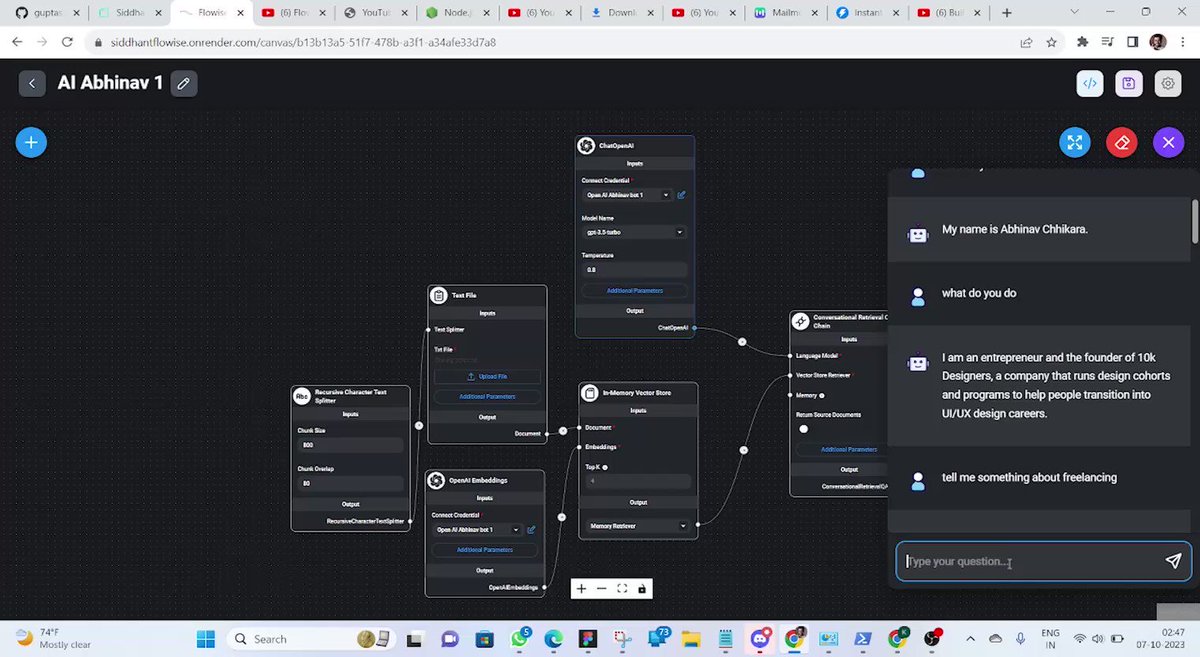
9. FlowiseAI

FlowiseAI is an open-source, visual development platform for building agentic systems from lightweight chat assistants to scalable, multi-agent workflows. Designed for rapid iteration, it provides modular components and low-code interfaces that enable developers to construct, orchestrate, and deploy AI agents with fine-grained control.
Key features include:
- Visual agent builder: Design agentic systems and workflows through a visual interface without writing complex code.
- Multi-agent support: Coordinate multiple agents to work in parallel or sequence across distributed workflows.
- Chatflow for single-agent use cases: Build interactive chatbots with tool use, knowledge retrieval, and natural language understanding.
- Human-in-the-loop (HITL): Incorporate human oversight to validate or review agent actions as part of a feedback loop.
- Execution tracing and observability: Monitor agent behavior with execution logs and integrations for observability tools like Prometheus and OpenTelemetry.

Source: FlowiseAI
Conclusion
Agentic AI is redefining how complex workflows are designed and executed by enabling systems that operate independently, adapt to context, and coordinate across tools and teams. By integrating perception, reasoning, planning, and real-time data retrieval, these solutions extend automation into domains that previously required constant human oversight. This architecture supports scalable, resilient, and intelligent systems that can manage variability, ambiguity, and dynamic objectives across a wide range of business and technical environments.
Was this post useful?
Thank you for your feedback!